Content Scaling with AI: A Complete Guide
Content demand is exploding, and keeping up requires more than speed. This guide breaks down how to use AI, structure, and strategy to scale smarter – creating high-performing, relevant content at every step.
In 2026, content demand is simply exploding. The pace of online conversation has never been faster. Audiences expect fresh ideas, tailored experiences, and authentic voices across every platform, every day, and all the time. For marketing teams, that means one thing: creating more content than ever before.
But here's the thing: scaling content often means trading quality for quantity. Deadlines tighten, creative teams stretch thin, and strategy falls behind execution. What was once a thoughtful process becomes a production line.
But it doesn't have to be that way.
In this guide, we'll explore how AI transforms the way teams scale content, helping you produce more without diluting your brand's voice or impact. You'll learn the frameworks, tools, and real-world examples behind effective scaling, and see how leading teams are using intelligence-driven systems to stay relevant at speed.
And most importantly, you'll see how Recommend helps you do it all. It combines real-time audience insight, automated workflows, and ready-to-use templates so you can move from idea to execution in minutes.
What Is Content Scaling?
Content scaling is the process of expanding your content output without linearly increasing time, cost, or headcount. The idea isn't to flood every channel with more posts; it's about creating systems that let you produce more strategically.
True scaling doesn't mean sacrificing quality for speed. In fact, it's the opposite: when done right, scaling should enhance quality by giving your team the structure, data, and automation they need to focus on creativity and insight.
Quantity Scaling vs. Strategic Scaling
There's a big difference between producing more content and producing better content, faster.
Quantity scaling focuses on volume. The goal is to push as much as possible, often without a clear purpose or alignment.
Strategic scaling is intentional. It starts with audience insight, guided by goals, formats, and messages that connect across the customer journey.
As a result, every new asset strengthens your brand's presence instead of diluting it. Strategy-driven scaling delivers higher engagement, better ROI, and a consistent story across every channel, all while keeping your creative standards high.
The Role of AI in the Scalability Equation
AI redefines what's possible. Instead of manually researching topics, brainstorming headlines, or formatting endless variations of the same message, AI automates the heavy lifting, from insights discovery to ideation to content generation.
According to the 2024 State of Marketing AI Report, nearly all surveyed marketers now incorporate AI into workflows. That just underscores how content scaling is shifting from manual to machine-assisted.
With the right setup, AI enables real-time responsiveness. You can spot trends as they happen, align them with your brand voice, and turn those insights into relevant and high-quality outputs. As explored in our guide on content automation, this type of intel turns AI from a writing assistant into a true growth engine.
Why Content Scaling Matters in 2026
The content landscape has changed. In 2026, brands aren't just competing for attention; they are competing for relevance. Every trend, conversation, and algorithm shift demands timely, high-quality content that connects instantly.
When done strategically, content scaling helps stay visible, consistent, and ahead of the curve. It turns content from a marketing function into a performance engine that drives awareness, engagement, and long-term loyalty.
Changing Landscape
Over the past few years, platform algorithms have become smarter and far less forgiving. They now reward relevance, speed, and freshness. For example, Google's latest "freshness" algorithm flags whether content is up-to-date and aligned with user intent. This means that brands that publish consistently, with precision and value, rise to the top.
At the same time, audiences expect personalized and high-quality experiences across every touchpoint. A generic blog post or outdated campaign no longer earns attention. People want to see brands that reflect their world in real time.
That's where scaled, intelligent content operations make the difference. With the right system and with the AI working in the background, teams can keep pace with both platform demands and human expectations.
Benefits of Scaling Strategically
As we've already highlighted, strategic scaling isn't just about volume - it's about impact. When you scale with purpose, every new asset adds measurable value. Here's what it enables:
Greater brand visibility: stay consistently present where your audience spends time.
Improved SEO and discoverability: fresh, frequent, and high-quality content builds authority fast.
Multi-channel reach: adapt one idea across platforms.
Consistency and brand trust: keep tone, visuals, and messaging aligned at scale.
Faster go-to-market cycles: respond to trends and opportunities in hours, and not in weeks.
Consider this: according to Hubspot's benchmarking data from 2018, companies that publish 16+ blog posts per month see roughly 3.5x more traffic than those publishing 0-4. And that's the result of consistent and strategic scaling.
Core Pillars of Effective Content Scaling
Scaling content effectively starts with structure. The most successful teams rely on clear strategy, efficient workflows, strong quality control, and smart automation. These are the core pillars that make sustainable growth possible.
Strategy & Planning
Every scalable content program starts with a clear strategy. Without a strategy, even the most advanced AI tools can't deliver meaningful results.
In this stage, the point is to understand your audience – who they are, what they care about, and how they move through your funnel. From buyer personas to journey mapping, strategy ensures every piece of content serves a purpose.
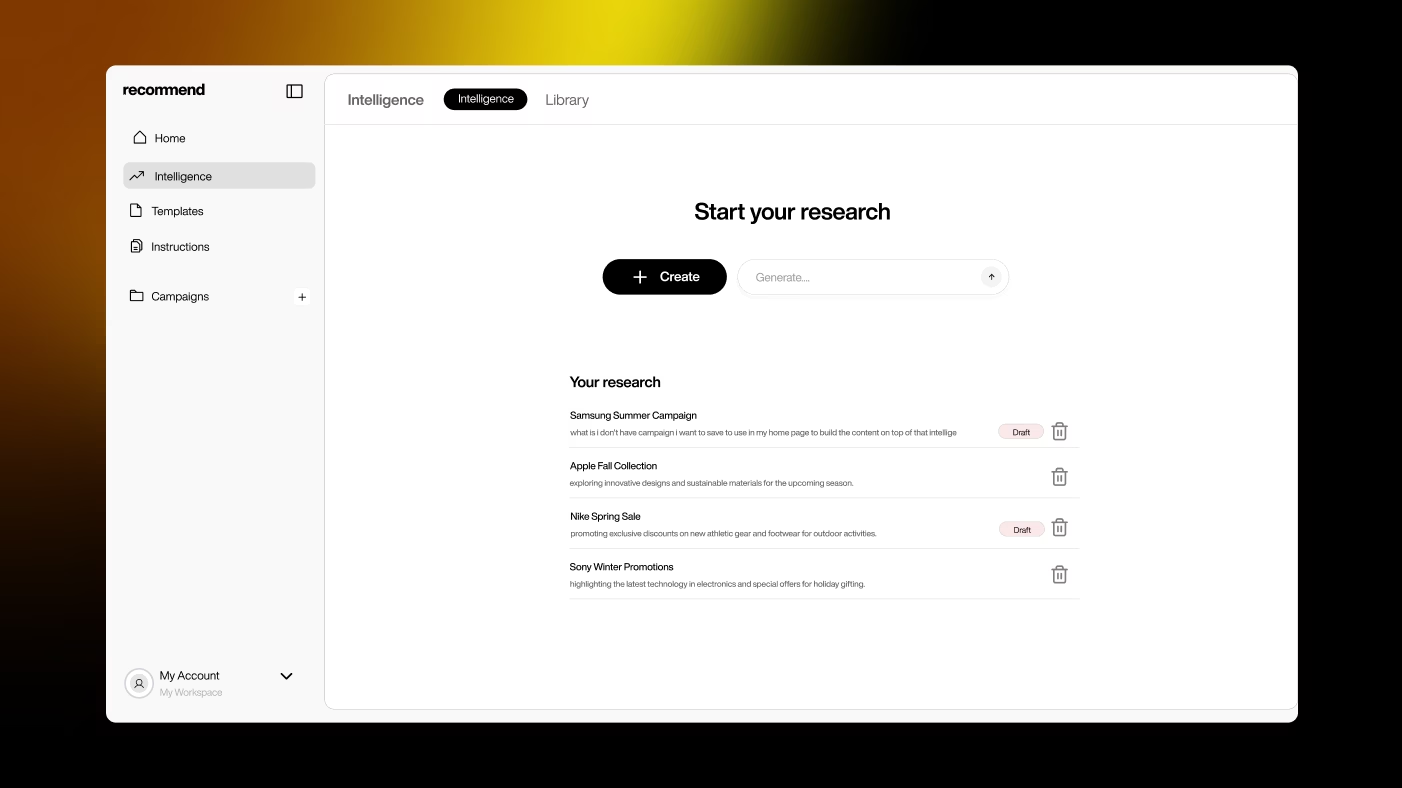
AI strengthens this foundation by revealing what's trending, what's resonating, and what's next. Recommend's trend intelligence continuously scans cultural signals and audience conversations to surface topics that truly matter right now. For more on how AI supports strategic planning, explore our guide on the best AI tools in marketing.
Workflow Design
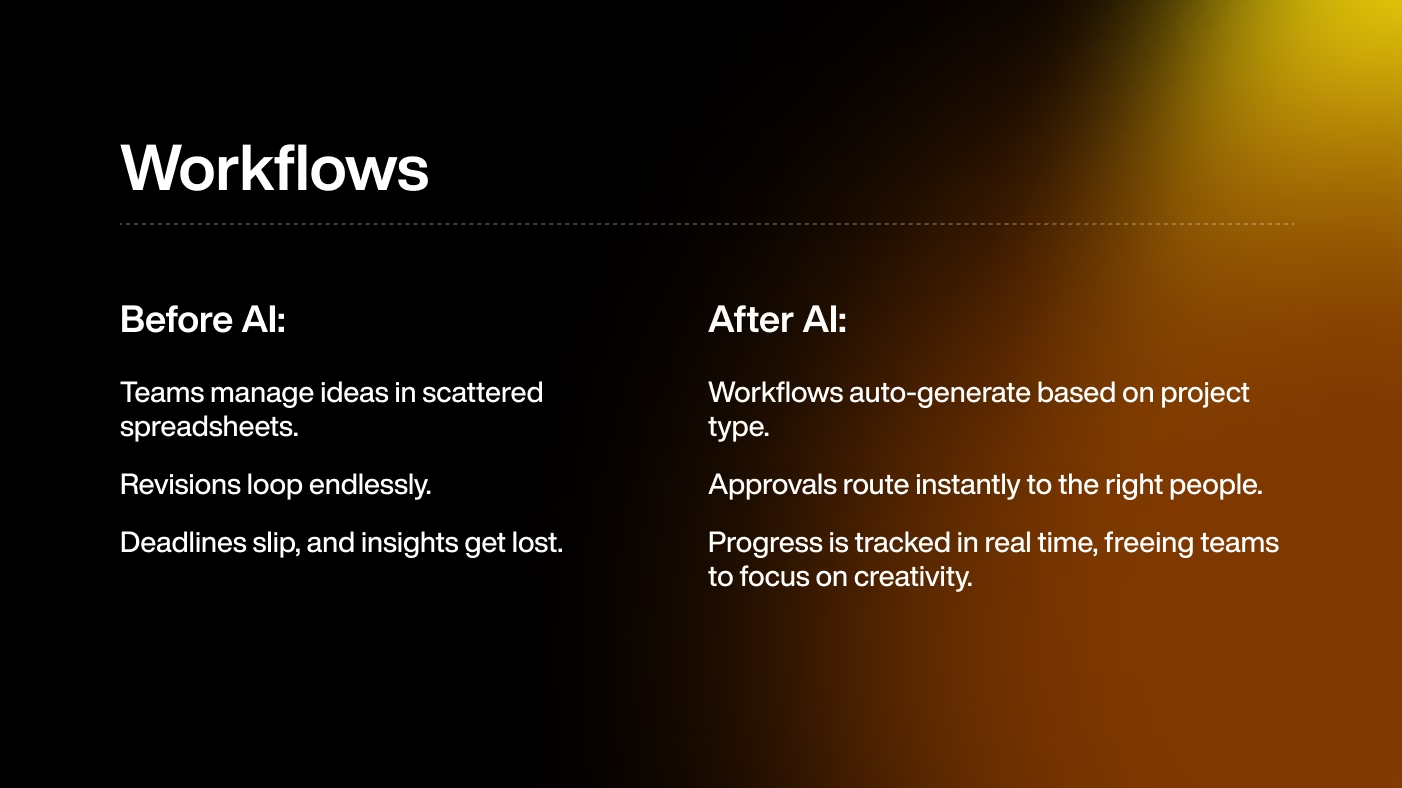
Once the strategy is set, execution needs structure. Without clear workflows – templates, editorial calendars, and approval systems – scaling breaks down quickly.
While traditional workflows rely on manual updates and back-and-forth communication, AI-assisted workflows streamline every step, from idea capture to final approval.
Quality & Governance
As you scale, consistency becomes your biggest challenge. Every new asset must reflect your brand's tone, style, and standards, no matter who creates it.
Establishing editorial guidelines, style systems, and review layers ensures quality never slips under pressure. Following the E-E-A-T framework – Experience, Expertise, Authoritativeness, Trust – keeps your content credible and compliant, especially in the SEO-driven industry.
AI supports editing by flagging off-brand language, tone mismatches, or factual inconsistencies. It doesn't replace human judgment. Instead, it augments it, allowing your team to focus on creativity and nuance instead of policing the small stuff.
Repurposing & Refreshing
Scaling isn't necessarily about creating something new. It's often about doing more with what you already have. Repurposing turns one strong idea into a full ecosystem of assets: a blog post can evolve into a carousel, a newsletter, or a short-form video.
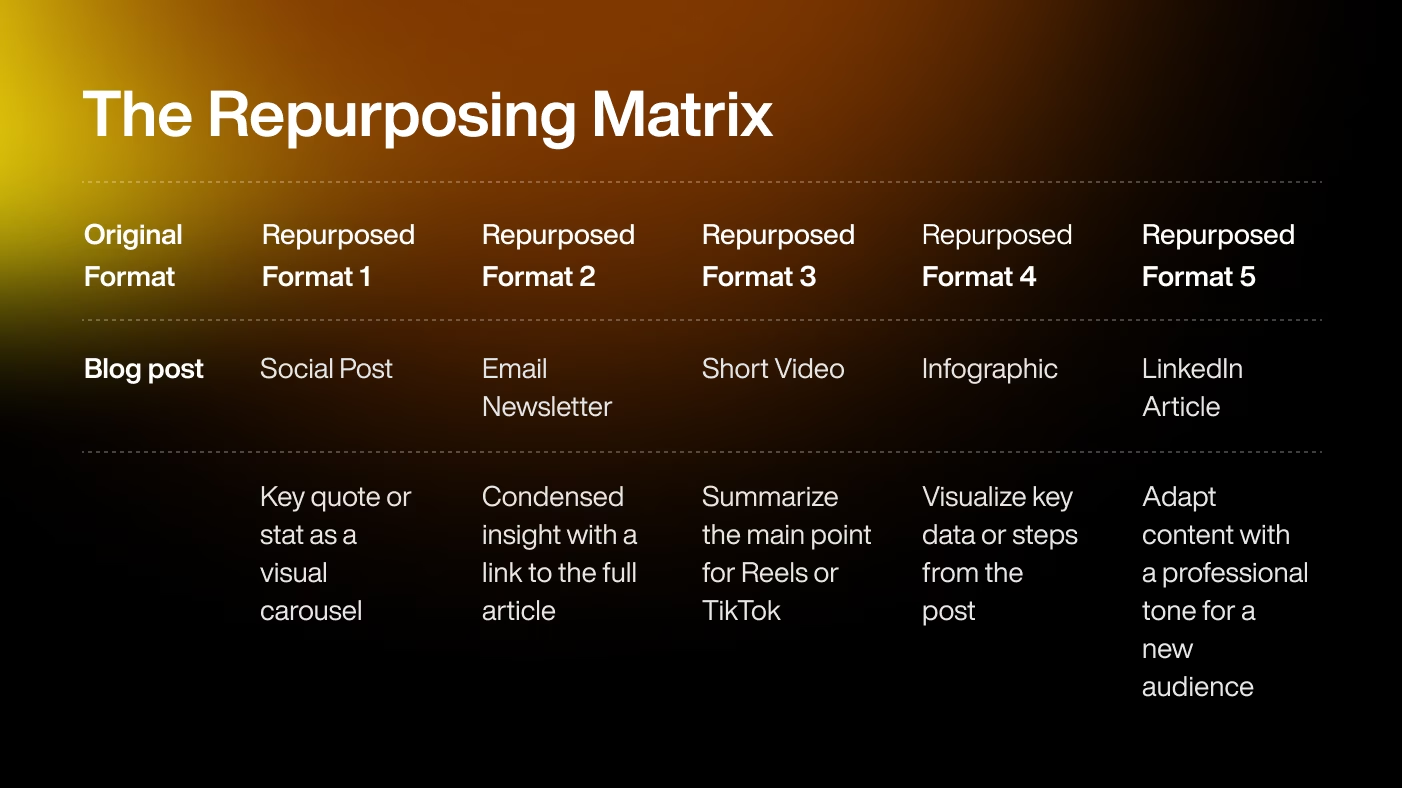
Refreshing, meanwhile, keeps evergreen content current. AI tools can identify which pages or articles are losing traction and recommend updates automatically.
Recommend makes both processes seamless – suggesting new angles, channels, and formats based on performance data. To see how AI supports this kind of creative reuse, check out our guide on AI content creation.
Content Automation Tools
Moreover, a scalable content operation depends on an integrated tech stack. That's a connected system of tools that work together to make content creation faster, smarter, and more measurable.
Here's what that type of ecosystem usually includes:
Content Management System (CMS): this is the backbone of publishing. A CMS lets teams create, organize, and update content across websites and channels without needing to code.
Analytics Platforms: from Google Analytics to AI-driven dashboards, analytics tools measure what's working. With them, you can reveal pattern performance and optimize opportunities.
AI Writing and Ideation Tools: these help teams overcome creative bottlenecks by generating outlines, headlines, or entire drafts based on data and brand tone.
Scheduling and Distribution Tools: automate when and where your content goes live, ensuring consistency across platforms and time zones.
Performance Dashboards: they aggregate all key metrics – engagement, conversions, reach – in one view for faster decision-making.
Together, these tools form the backbone of an efficient content ecosystem. But they only reach their full potential when they're connected. Recommend acts as the central hub, linking research, creation, and optimization in one seamless environment. With Recommend, your content engine runs continuously, from trend detection to distribution, without manual hand-offs.
To explore how these systems work together in practice, take a look at our guide on the best marketing automation tools to scale – a deep dive into the tech that makes large-scale content production possible.
Step-by-Step Framework: How to Scale Content with AI
Scaling isn't guesswork; it's a process. Whether you're a solo marketer or part of a global team, following a structured framework helps you scale efficiently without losing control of creativity.
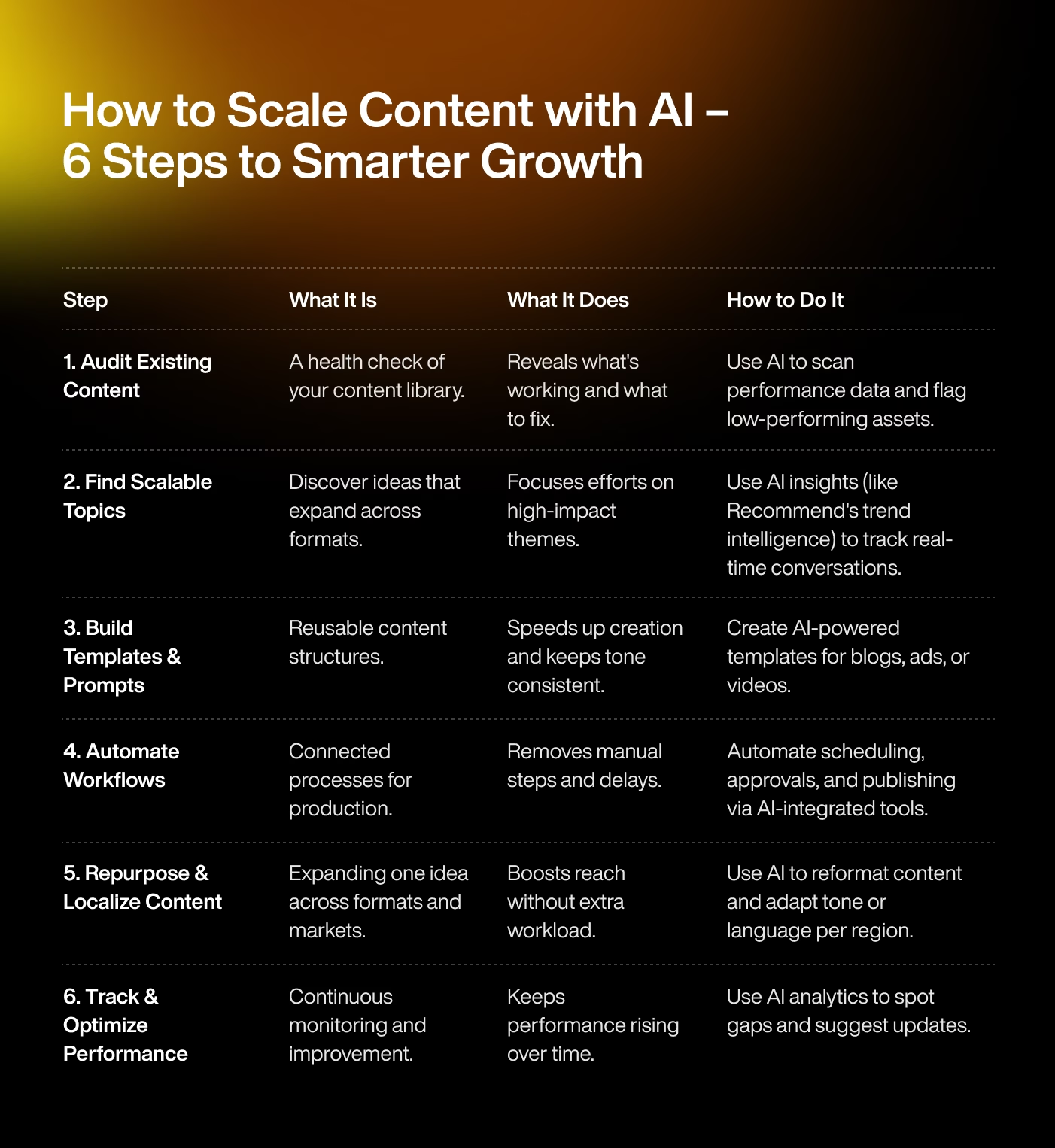
Here's a six-step system that shows how to move from insight to execution – and how AI makes each stage faster, smarter, and more connected.
Step 1: Audit Existing Content
Before scaling up, you need to know what's already working. A content audit gives you visibility into your strengths, gaps, and outdated assets. Traditionally, this means manually reviewing URLs, spreadsheets, and performance metrics. That can be a time-consuming process. But with AI, it's instant.
AI tools can now automate this entire process. They can scan your content library, track engagement patterns, and spot performance gaps instantly. The result is a clear, data-backed roadmap for what to refresh, repurpose, or retire.
Step 2: Find Scalable Topics
Not every idea can scale. The most valuable topics are evergreen, high-impact, and adaptable across multiple formats and platforms.
This is where Recommend shines. Its cultural intelligence engine analyzes real-time conversations, trending keywords, and media coverage to surface topics your audience actually cares about. By spotting these signals early, you can create content that stays relevant longer and performs better.
For a deeper look at this discovery process, explore how to find trending topics for your content!
Step 3: Build Templates & Prompts
Once you know what to create, the next challenge is producing it efficiently and consistently. Templates and AI prompts provide the framework for doing that at scale.
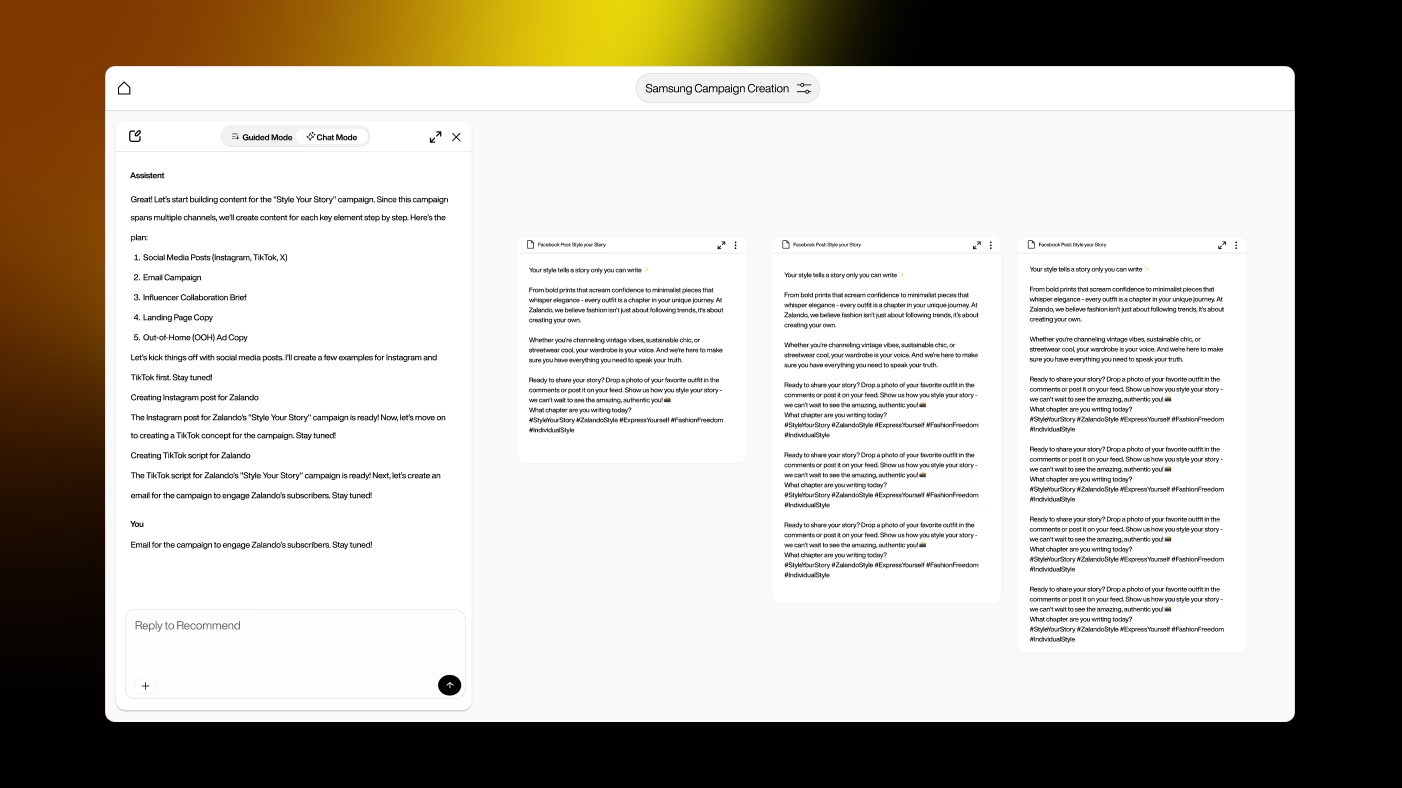
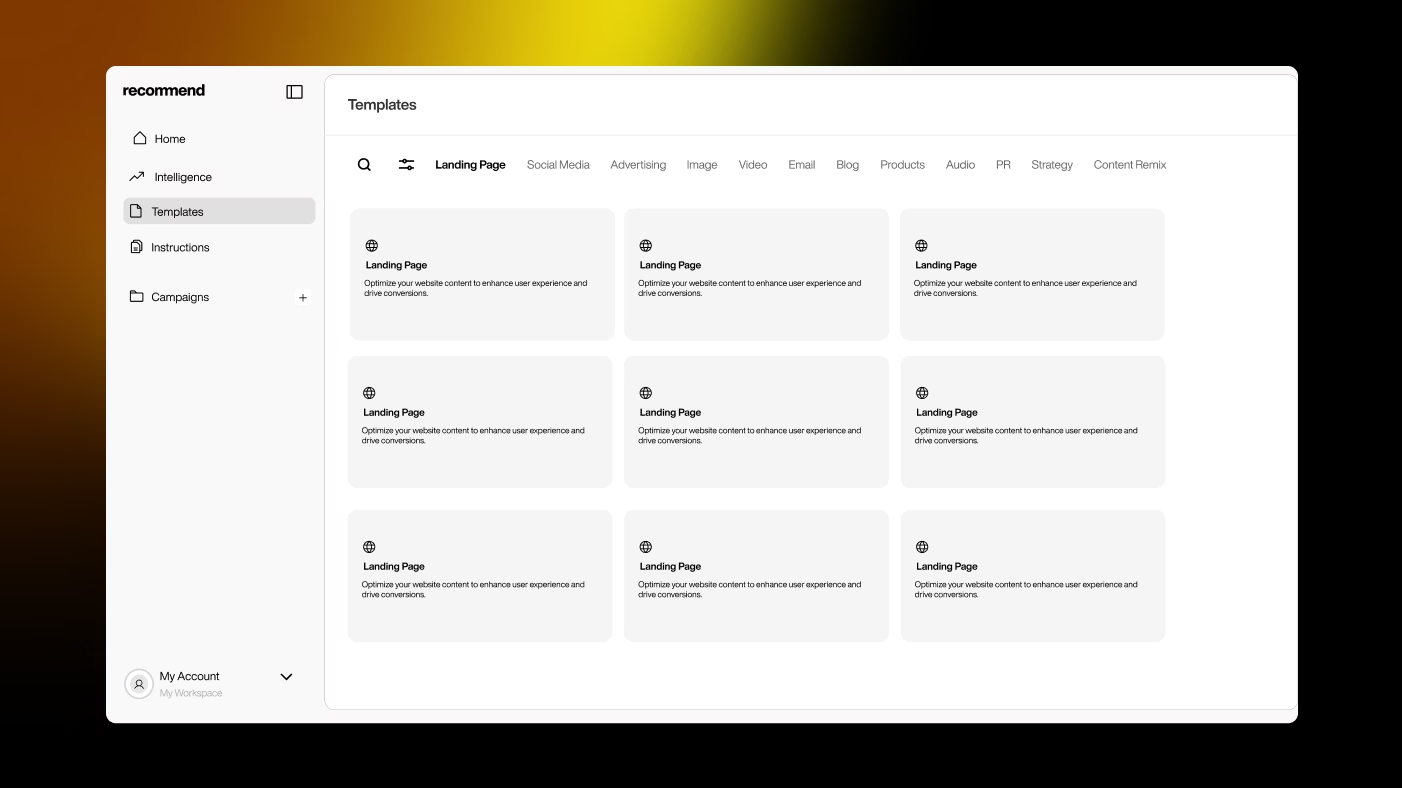
Recommend simplifies this with pre-built templates across formats like blogs, landing pages, ads, and scripts. These templates adapt to your tone and goals, so teams can move from insight to execution in minutes.
Step 4: Automate Workflows
Even the best ideas stall without solid execution. Workflow automation keeps production flowing by reducing friction and repetitive manual steps.
AI can handle routine tasks like assigning projects, setting deadlines, tagging assets, and scheduling content. Integrated with tools such as your CMS, analytics, or collaboration platforms, automation keeps everything running in sync, from ideation to publication.
That way, you'll have fewer bottlenecks, faster turnarounds, and a smoother creative process.
Step 5: Repurpose & Localize Content
Scaling efficiently often means maximizing what you already have. Repurposing turns one strong piece into many – a blog post becomes a newsletter, infographic, or short-form video.
Localization takes this further by tailoring content for new markets, languages, or demographics. AI assists by adapting phrasing, tone, or examples for local audiences while keeping the brand voice consistent.
The payoff is global reach without losing authenticity.
Step 6: Track & Optimize Performance
Scaling doesn't end in publishing. It's an ongoing cycle of measurement, learning, and refinement.
AI-powered analytics tools monitor engagement, conversions, and reach in real time. They flag underperforming assets and recommend optimizations, from keyword tweaks to refreshed visuals.
Case Example: Scaling Smarter with AI
Let's look at how scaling with intelligence makes a measurable difference.
Real-World Scenario
UniCredit, a leading European bank, wanted to stand out in a crowded credit market dominated by generic, one-size-fits-all campaigns. Instead of broadcasting the same message to everyone, they built a trend-powered content system that identified real-life triggers, moments when people actually needed credit, like car purchases, home renovations, or seasonal expenses.
Using Recommend, UniCredit connected those real-world signals to timely, relevant campaigns. Each piece of content spoke directly to what customers were trying to achieve – their life goals, not just loan products.
The results:
25% higher click-through rate on trend-powered landing pages
Faster campaign turnaround, responding to market shifts in days instead of weeks
Improved engagement, with lower bounce rates and longer on-site sessions
Consistent quality, as content stayed on-brand and insight-driven at scale
It wasn't about pushing more ads, but about showing up at the right time with the right message. By scaling intelligently, UniCredit moved from interrupting people to meeting them exactly where they were.
Common Pitfalls in Content Scaling
Scaling content sounds pretty straightforward – more content, more reach, more results. But without the right balance of strategy, structure, and human oversight, it can backfire fast. Here are the most common mistakes teams make when scaling – and how to avoid them.
Producing More but Lower-Quality Content
When speed becomes the only goal, quality slips. Algorithms and audiences can tell the difference.
How to avoid it:
Prioritize relevance and value over sheer volume
Build review layers and quality standards into every workflow
Use AI to assist creation, not to replace creative thinking
Ignoring Audience Intent
Scaling means little if your content doesn't connect. Without clear intent, even high-volume publishing falls flat.
How to avoid it:
Map every piece to a stage of your audience journey
Use data and social listening to align topics with real needs
Regularly revisit personas as behaviors shift
Weak Internal Linking
When scaling fast, the structure often breaks. Weak or inconsistent linking leaves valuable content buried, hurting both UX and SEO.
How to avoid it:
Maintain a content map that shows topic clusters and key links
Train AI-assisted tools to suggest internal links automatically
Audit internal linking quarterly to catch gaps
Overlooking Refresh Cycles
Even great content loses traction over time. If you don't update it, performance and credibility drop.
How to avoid it:
Schedule regular content reviews – quarterly for high-impact pages
Use AI analytics to flag declining pieces for refresh
Refresh headlines, visuals, and data before republishing
Over-Automation with No Human Oversight
Automation is powerful, but it can't replace judgment. Too much of it leads to generic, off-brand output.
How to avoid it:
Keep humans in the loop for strategy, tone, and final review.
Use automation for scale, but human insight for storytelling.
Balance AI efficiency with editorial intuition.
Metrics & Continuous Optimization
Scaling isn't a one-time achievement. It's a process that consists of measuring, learning, and refining. The best content engines are fueled by insight. Tracking the right metrics ensures you're not just producing more content, but producing content that performs.
What to Measure
It's clear by now that more output doesn't always mean more impact. To know whether your efforts are sustainable, focus on metrics that measure both efficiency and effectiveness.
Content Velocity: how quickly new content moves from idea to publication. A steady, predictable pace signals strong workflows.
Engagement Rate: tracks how audiences interact with your content (clicks, shares, comments, and time on page). Engagement reflects true resonance.
Click-Through Rate (CTR): measures how effectively your headlines and CTAs attract action. High CTR means your message is landing.
Conversion Rate: shows how well your content drives desired outcomes (sign-ups, downloads, purchases). It's where storytelling meets results.
ROI: the ultimate measure of scalability, revealing whether your content engine is generating more value than it consumes.
The Role of Analytics and AI
Analytics is where scaling turns from intuition to intelligence. Tools like Google Analytics, Search Console, and SEO platforms reveal what's working, but integrating AI takes that insight to another level.
The Future of Content Scaling
The next wave of content scaling is already here. It's driven by AI that's more capable, more connected, and more creative than ever before. What started as automation is evolving into intelligence, into systems that understand context, predict demand, and adapt content in real time.
The global market for AI in marketing is expected to grow more than fourfold by 2030, which points to one thing: content scaling via AI isn't a trend – it's the infrastructure of tomorrow.
Emerging Trends
Multimodal AI (text, image, video): AI is moving beyond text. It can now generate images, videos, voiceovers, and interactive experiences. This enables teams to scale not just words, but entire multimedia campaigns with consistency and speed.
Personalized scaling (adaptive content): one-size-fits-all content is fading fast. AI enables adaptive content that automatically tailors messaging, visuals, and tone to different audiences, segments, or even individual users.
Human–AI collaboration: the future isn't about human vs machines. It's about humans enhanced by machines. Creative teams will spend less time on manual prediction and more time on ideas, storytelling, and innovation.
Data-driven storytelling: analytics and creativity are merging. With AI translating data into narrative insight, brands can tell stories rooted in audience behavior, cultural shifts, and real-time performance data.
Predictive content: this is perhaps the biggest leap – AI that anticipates what audiences will care about next. By analyzing emerging signals and search intent, it can guide brands to create content before demand peaks, keeping them permanently ahead of the curve.
Recommend's Role in the Future
As these trends converge, Recommend sits at the center of this transformation. It's not just a tool for creating content faster. It's the intelligence layer that powers next-generation scaling. By combining real-time audience insight, automation, and creative adaptability, Recommend helps brands move from simply creating content to creating relevance at scale.
Looking ahead, the future of scaling won't be about volume, but about precision. The brands that win will be those that understand their audience deeply, respond instantly, and create meaningfully. With intelligence at the core, scaling becomes less about production and more about connection. And that's exactly where Recommendi is leading the way.
Conclusion
Content scaling isn't about chasing volume – it's about achieving relevance at speed. With AI, teams can finally scale content that's not just faster to produce, but smarter, more consistent, and more aligned with what audiences actually care about.
The frameworks, tools, and examples in this guide show that intelligent scaling starts with strategy, thrives on structure, and succeeds with continuous improvement. But even the most advanced automation still needs the human layer – the creativity, intuition, and judgment that turn information into genuine connection.
AI gives you the reach. Strategy and governance keep the quality. Together, they make scaling sustainable.
Ready to scale your content with AI?
Try Recommend – your all-in-one engine for intelligent, scalable content creation.