Personalized Content - What It Is and How to Do It
Personalized content drives higher engagement, loyalty, and ROI. See examples, strategies, and how AI helps you personalize marketing at scale.
Generic content doesn't work anymore. People scroll past it, ignore it, or forget it. Today's audiences expect content that feels relevant to them – their role, their industry, their moment. Most marketers understand this, but struggle to deliver personalization at scale without adding complexity, cost, or chaos to their workflow. AI helps bridge that gap, turning real audience insight into content that’s tailored, timely, and truly relevant.
In this guide, we break down what personalized content really means, why it matters, how teams can do it well, and how AI makes personalization scalable across every channel.
By the end, you’ll have a clear framework for creating content that resonates, and a practical path to putting personalization into action.
What Is Personalized Content?
The personalized content definition is simple: it's content tailored to a specific person or audience segment based on who they are, what they care about, and how they behave. Instead of speaking to everyone the same way, personalized content adapts the message, format, or timing to match individual context, which makes it non-generic and relevant.
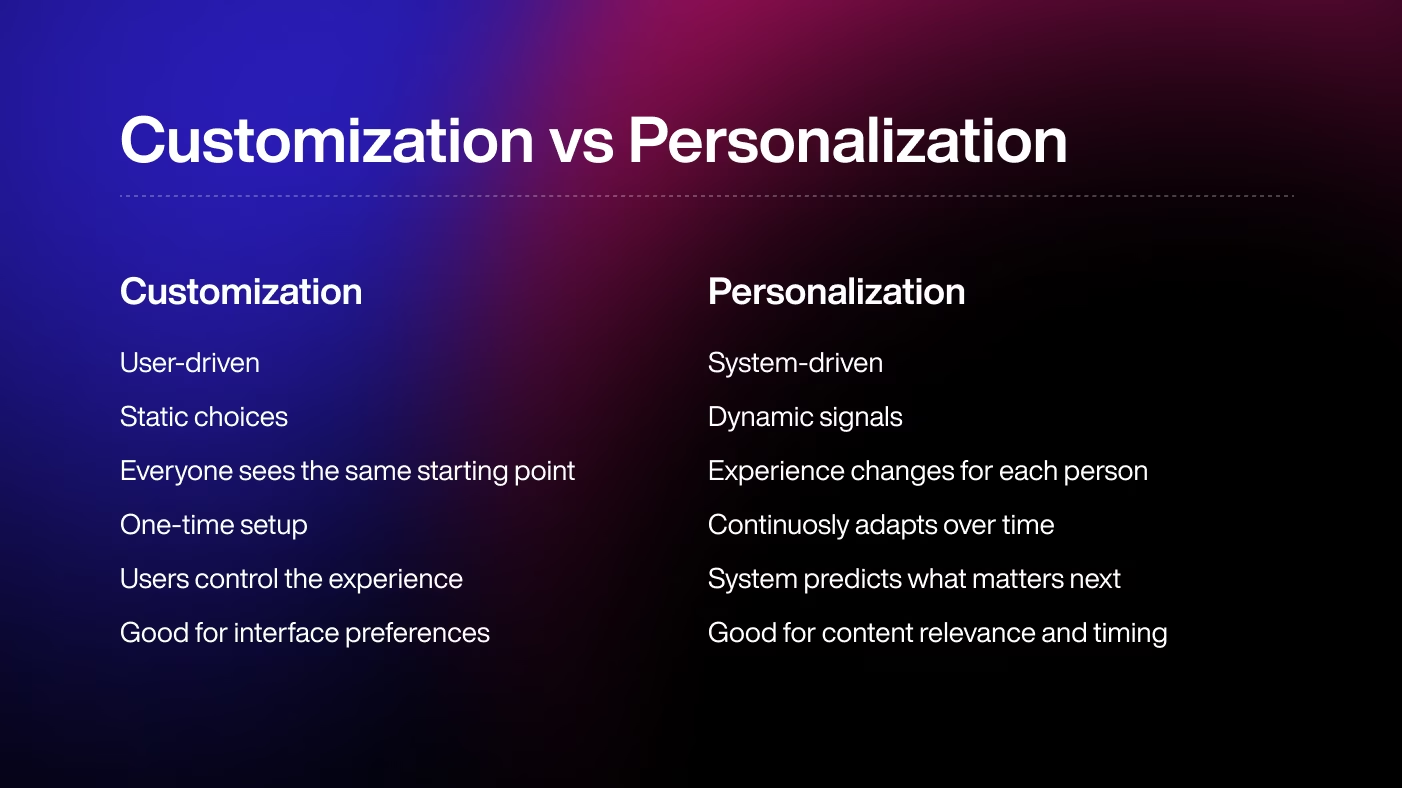
But there's an important distinction to make here: personalization is not the same as customization.
Customization is user-driven. It happens when people actively choose their preferences, like selecting the categories they want to follow in a news app.
Personalization is system-driven. It happens when algorithms adapt content automatically based on data, behavior, and signals.
Netflix recommending shows based on your viewing history or Spotify creating playlists from your listening habits are classic examples of personalization. You don't have to ask for it – it just "gets" to you.
Content personalization works the same way. It uses behavioral, contextual, and predictive signals to serve the right message to the right person, at the right moment, without requiring them to manually configure the experience.
Type of Content Personalization
Personalization can happen in multiple ways, depending on the data and signals you use:
demographic personalization: based on attributes age, gender, education level, income, or family status
behavioral personalization: based on actions such as page visits, clicks, purchases, or content consumption
contextual personalization: based on real-time context, like device, time of day, location, or channel
predictive personalization (AI-driven): uses AI to anticipate what someone will care about next, based on patterns and signals.
Why Personalized Content Matters
Personalized content isn't just a nice add-on – it's a proven performance driver. According to Contentful's Personalization Report, 95% of marketers say their personalization efforts are effective, and nearly 9 in 10 consider personalization essential for future business success.
At the same time, BCG's research on personalization in action shows that companies doing personalization well can generate up to 40% more revenue than slower adopters.
Beyond revenue and performance, personalization directly shapes how people feel about your brand. When content reflects someone's interests, behavior, or context, it creates a stronger emotional connection and perceived relevance. That sense of being understood builds trust – and trust is what drives repeat engagement, long-term loyalty, and retention.
This matters in both B2C and B2B environments.
In B2C, personalization powers tailored product recommendations, dynamic content feeds, and targeted offers that align with individual preferences and behavior. In B2B (or company-to-consumer models through agencies and marketing teams), it enables brands to adapt messaging and campaigns based on audience segments and interaction history – ensuring relevance without losing speed or consistency.
In both cases, the outcome is the same: your message reaches the right person, in the right context, at the right moment – making your content more impactful and more efficient.
Internal Team Benefits
Personalization isn't just valuable for audiences. It's a major win for the teams creating the content as well. When you tailor messaging to specific segments instead of producing broad, catch-all assets, you naturally reduce content waste. Fewer pieces end up unused, and more of what you create actually performs.
It also accelerates how teams work. Personalized frameworks and data-driven insights make it easier to build targeted variations quickly, which shortens campaign cycles and helps teams move from concept to execution without bottlenecks.
And ultimately, it improves ROI on content production. Every asset has a clearer purpose, stronger relevance, and a higher chance of driving results. You spend less time guessing and more time creating content that's built to work.
What Happens If You Don't Personalize?
Skipping personalization doesn't keep you neutral. It puts you at a disadvantage. When your content speaks to everyone the same way, audiences quickly lose interest. Engagement drops, trust weakens, and churn rises because people don't feel understood or valued.
It also makes your marketing more expensive. Without relevance, campaigns require higher spend to achieve the same results, driving up ad costs and lowering overall efficiency. Meanwhile, competitors using AI-driven personalization gain an edge. They move faster, message smarter, and deliver experiences that customers naturally gravitate toward.
Common Personalization Mistakes
Personalization can create a huge impact, but only when it's done thoughtfully. Many teams fall into the same traps. It's not because they lack effort, but because personalization is easy to misunderstand or oversimplify. Here are the most common mistakes companies make, and why they matter.
Over-personalization that feels creepy: when brands use too much personal data people didn't knowingly share, it breaks trust. Personalization should feel helpful, and not invasive.
Personalizing without a strategy: creating variations for the sake of it leads to noise. Without clear segments, goals, or messaging frameworks, personalization becomes just extra work with no payoff.
Using a bad or outdated idea: personalization is only as strong as the signals behind it. Old, inaccurate, or incomplete data leads to mismatched messages that confuse or frustrate the audience.
One-time personalization with no iteration: personalization isn't a one-and-done project. Audiences, behaviors, and contexts are shifting constantly. Without ongoing testing and refinement, personalization quickly becomes inaccurate and ineffective.
Confusing personalization with inserting a name: adding a first name to an email isn't personalization – it's formatting. Real personalization adapts to offer, message, or content based on someone's needs and behavior.
Personalized Content Examples
Depending on the channel, the audience, and the goal, personalization can take many forms. What matters most is that the content adapts to the individual, and not the other way around.
Below are examples from different industries and formats that show how personalization works in practice and why it makes content more relevant, more efficient, and more effective. Each one highlights a common use case and the role AI plays in making it scalable.
E-commerce (Product Recommendation)
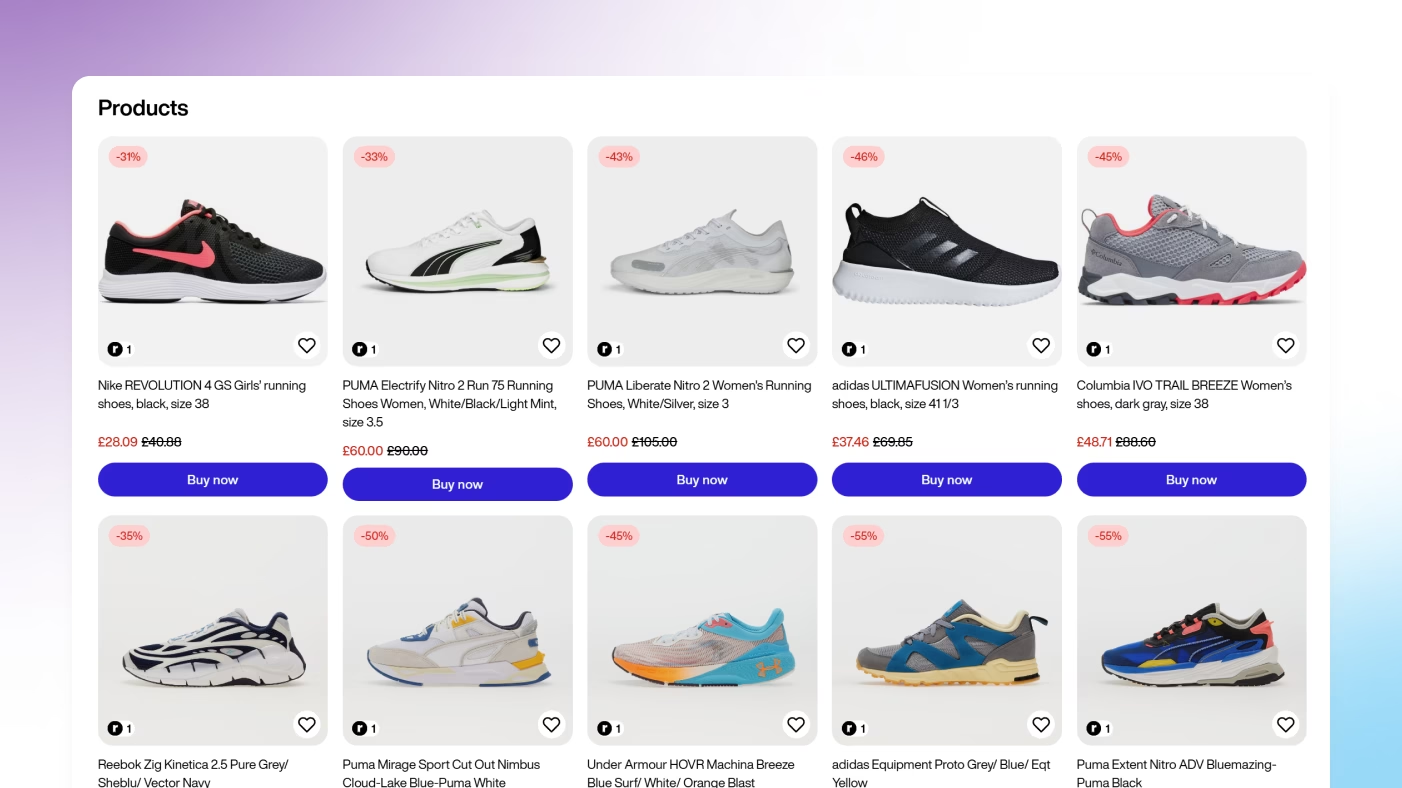
What it is: e-commerce personalization typically uses behavior, purchase history, and real-time signals to recommend products that match a shopper's interests.
Why it matters: relevant recommendations increase conversion rates, average order value, and overall satisfaction because shoppers don't have to hunt for what they need.
Example in action: a customer who recently viewed running shoes sees new colorways, accessories, or similar models highlighted on the homepage or in follow-up emails.
How AI helps: AI can analyze thousands of signals instantly and surface the most relevant product suggestions at scale, without manual merchandising work.
SaaS (Personalized Onboarding)
What it is: in SaaS, personalized onboarding adjusts tutorials, prompts, and in-app guidance based on a user's role, goals, or product behavior, helping each person get value faster.
Why it matters: not every user needs the same features or workflows. Tailor onboarding reduces friction, increases activation rates, and helps users reach their "aha" moment sooner, which directly improves retention.
Example in action: a marketing manager signing up for an analytics platform sees onboarding steps focused on campaign dashboard and reporting, while a developer sees setup guides for integrations and API access.
How AI helps: AI can detect patterns in user behavior, segment new signups instantly, and generate onboarding flows that adapt automatically. That ensures every user gets a path that matches their needs without manual setup.
Email marketing (Segmented Messages)
What it is: in email marketing, personalization means sending different messages to different audience segments based on demographics, behavior, purchase history, or engagement patterns.
Why it matters: segmented emails feel more relevant, drive higher open rates, and significantly improve click-through and conversion. Instead of blasting the same message to everyone, brands can tailor offers and content to what each group actually cares about.
Example in action: a skincare brand sends one version of a campaign to customers who previously purchased moisturizers, another to those browsing anti-aging products, and a third to first-time visitors who haven't bought yet.
How AI helps: AI can automatically identify segments, predict what each group is likely to respond to, and generate message variation at scale.
Social media
What it is: on social platforms, personalization means creating different variations for specific audience groups, whether by interests, behaviors, demographics, or engagement history.
Why it matters: social feeds move fast, and relevance is everything. Custom audience content helps brands break through the noise with messaging that feels tailored.
Example in action: a fitness brand runs multiple versions of the same campaign: strength-training tips for gym enthusiasts, low-impact routines for beginners, and targeted ads for users who recently engaged with nutrition content.
How AI helps: AI analyzes audience behavior and trending topics in real time, then helps generate content variations that match what specific groups are responding to, making targeted social campaigns faster and more effective.

Blog Content
What it is: dynamic content blocks adapt parts of a blog post based on who's reading it, showing different examples, CTAs, or recommendations depending on the reader's interests, behavior, or stage in the journey.
Why it matters: not all readers come to a blog with the same intent. Personalized modules keep content relevant, increase time on page, and guide different audience types toward the next best action more effectively.
Example in action: a visitor coming from a "beginner's guide" article sees introductory resources and product basics, while an experienced user coming from pricing pages sees advanced tutorials, case studies, or upgrade prompts in the same blog layout.
How AI helps: AI can generate tailored content variations, predict which blocks each visitor will find most valuable, and update them in real time. That way, a single blog post will be turned into multiple personalized experiences at scale.
Product-led SaaS
What it is: in product-led SaaS, personalization happens directly inside the product experience. The interface adapts to each user by recommending features, tools, or workflows based on how they use the product.
Why it matters: most users don't explore the full product on their own. Personalized recommendations help them discover value faster, adopt the right features, and get more out of the product, which drives activation, retention, and expansion.
Example in action: a project management tool notices a user frequently collaborates with freelancers and automatically recommends features like guest access, file-sharing templates, or time-tracking modules.
How AI helps: AI analyzes in-product behavior at scale, identifies patterns, and predicts which features each user is ready for – which drives activation, retention, and expansion.
Media/Publishing
What it is: in media and publishing, personalization means adjusting content feeds, article recommendations, or homepage layouts based on a reader's interests, reading history, or engagement patterns.
Why it matters: readers are overwhelmed by choice. When a feed feels curated to their tastes, they spend more time on the site, explore more articles, and develop a stronger habit of returning, which directly boosts loyalty and revenue.
Example in action: a reader who regularly clicks on technology and culture stories sees more pieces from those categories highlighted on the homepage, while another who prefers long-form analysis gets in-depth features prioritized in their feed.
How AI helps: AI can analyze reading behavior in real time, understand topic affinities, and automatically serve personalized content layouts, which makes every visit feel tailored without manual editorial work.
Recruitment / HR: Personalized career page content based on role or industry
What it is: in recruitment and HR, personalization tailors career page content, job recommendations, or hiring information based on a candidate's role, skills, industry, or browsing behavior.
Why it matters: candidates want to quickly understand whether a company is the right fit for them. Personalized career content helps them find relevant roles faster, reduces friction in the application process, and strengthens employer brand perception.
Example in action: a software engineer lands on a career page and immediately sees engineering roles, tech-stack information, and employee stories from the engineering team, while a sales candidate sees success stories, compensation details, and open positions in their region.
How AI helps: AI can detect a visitor's background from signals like browsing behavior, location, or referral source, then dynamically surface job categories and content that match their profile, improving both candidate experience and conversion.
How AI Makes Personalized Content Creation Scalable
Personalizing content manually is slow, inconsistent, and resource-heavy. Teams spend hours researching audiences, writing endless variations, and adjusting messaging by hand, only to end up with content that quickly becomes outdated. Scaling across channels, segments, and markets is nearly impossible without sacrificing quality or speed.
This is where AI becomes essential. Instead of relying on manual guesswork, AI processes patterns, behavior, and cultural signals instantly, making personalization faster and more accurate. It doesn't just automate tasks – it understands what different audiences care about and adapts content accordingly.
Here's what AI enables:
predictive analytics: anticipating what each audience segment will find relevant next
smart audience segmentation: grouping people based on behavior, interests, and real-time signals
dynamic content generation: creating tailored variations automatically
automated workflows: keeping personalization consistent across every format and channel.
How to Create Personalized Marketing Content
Personalized content works best when it follows a clear, repeatable process. Instead of guessing what each audience group needs, this framework helps you build messaging that's relevant, consistent, and easy to scale across channels.
Identify Your Audience Segments
Start by determining who you're speaking to. Segments can be based on demographics, behavior, interests, customer journey stages, or purchase intent. The goal is to group people in a way that reflects what they care about and how they make decisions. Strong segments create the foundation for every personalization layer that follows.
Define Goals and Messaging
Once segments are clear, define what each one needs to know, feel or do. Your messaging should map to those goals: problem awareness for one group, product education for another, conversion prompts for a third. When every segment has its own purpose and message, your content becomes more intentional and more effective.
Collect and Analyze Data
Use data to understand how each segment behaves. This can include browsing patterns, engagement signals, purchase history, cultural trends, and real-time conversations. The better the data, the more relevant and timely your personalization will be. Think of this step as translating raw signals into actionable insight.
Use AI to Generate and Optimize Variations
AI accelerates the creation of tailored content by generating variations for different segments, channels, and formats. Instead of rewriting the same message five different ways, AI helps adapt tone, angle, and structure automatically. This makes personalization scalable while still maintaining consistency across your brand.
If you want toe get better results from AI content generation, check out our guide on how to write prompts! It's packed with practical examples you can apply right away.
You can also check out our library of AI prompts for content creation, designed to help every asset land smoothly with your target audience.
Measure Performance and Refine
Personalization isn't set-and-forget. Track what works: which segments respond best, which content variations drive action, and where people drop off. Use these insights to refine your messaging, update your segments, and improve future content. Iteration is what keeps personalization relevant over time.
How to Personalize Content at Scale
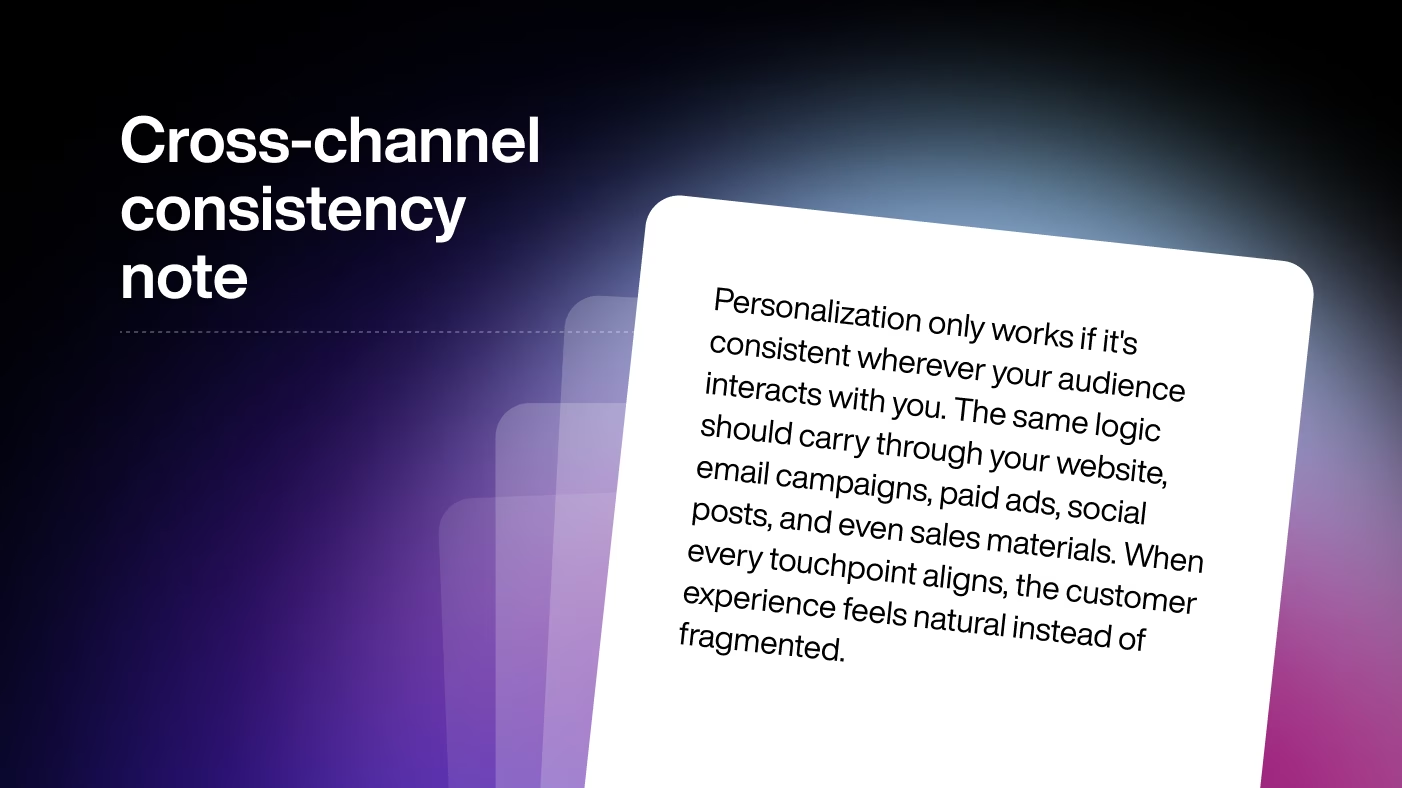
Scaling personalization is where most teams struggle. Doing it well requires more than good intentions. It demands time, coordination, and a consistent flow of reliable data. In reality, teams often face the same obstacles: limited bandwidth, inconsistent messaging across channels, and data trapped in silos that make it hard to understand what audiences actually need.
AI makes scaling personalization not only possible, but practical. By analyzing signals in real time, generating tailored variations, and keeping messaging aligned, AI supports the level of consistency and speed that manual workflows simply can't match.
This becomes especially powerful in sales, where the question "how can sales content be personalized at scale?" is top of mind for many teams. With AI, sales teams can automatically adapt outreach messages, case studies, or pitch decks based on industry, company size, or prospect behavior.
Sales teams can even use AI-generated personalized decks or outreach messages to engage prospects, all powered by Recommend's intelligence engine. It keeps messaging on-brand, aligned with audience needs, and fast enough to match the pace of modern sales cycles.
Conclusion
Personalized content has moved from a competitive advantage to an expectation. Audiences want messages that reflect who they are, what they care about, and where they are in their journey. When brands deliver that level of relevance, they earn stronger engagement, deeper loyalty, and better performance across every channel.
AI is what makes this possible at scale. It helps teams understand their audiences in real time, generate meaningful variations quickly, and maintain consistency without adding complexity. Instead of guessing what will resonate, you can build content that aligns with real signals, real behavior, and real needs.
If you're ready to turn insights into high-impact, personalized content, Recommend Studio brings intelligence and execution together in one place. It shows you what matters now – and helps you create it at scale.