AI Content Creation: What It Is and How to Use It
In this article, we'll break down what AI content creation really is and how it works.
AI has moved from being a buzzword to a daily tool in marketing. Recent surveys show that more than half of marketers already use AI in their workflows, and adoption is only accelerating. What was once experimental is quickly becoming standard practice.
That shift is why AI content creation matters so much right now. It's not just about saving time. It's also about finding relevant topics that resonate with the audience, scaling content, personalizing it for different audiences, and keeping pace in a crowded digital space.
In this article, we'll break down what AI content creation really is and how it works. We'll also mention the most popular tools that businesses rely on in their everyday workflows.
What Is AI Content Creation, and How Does It Work?
We can agree that AI is changing the way content gets made. However, there's still confusion about what that really means. In this section, we'll define AI content creation, look at how generative models work, compare traditional vs. AI-driven workflows, and clear up some common misconceptions.
Defining AI Content Creation
Let's start with the very definition.
AI content creation is a broad term, but at its core, it describes the use of artificial intelligence to generate or assist with digital content. Instead of starting from a blank page, you feed an AI system inputs (a prompt, a goal, or an outline) and it produces drafts, suggestions, or even finished assets. That could be anything from a blog article or email campaign to a social caption, graphic, or even a video script (or a video, for that matter).
Behind the scenes, this process relies on machine learning, natural language processing, and large language models trained on massive datasets. These systems are often referred to as generative models.

How Generative Models Work
Generative models are a type of artificial intelligence designed to create new content rather than just analyze existing data. As already mentioned, they are trained on massive datasets – text, image, audio, or video – and learn the patterns, structures, and relationships within that information.
When you enter a prompt, the model uses those learned patterns to predict what should come next. For text, it predicts the most likely sequence of words based on context. For images, it determines how shapes, colors, and textures should be arranged. For audio, it generates the next sound or tone that naturally follows. And for video, it creates the next sequence of frames that form a coherent visual story.
In practice, this looks simple: you can type "Write a blog outline on AI in marketing" and get a structured draft in seconds. Importantly, the model isn't copying word-for-word from the internet. Instead, it generates new content based on everything it has learned about language and context.
Traditional vs. AI-Driven Workflows
In a traditional content workflow, teams spend time researching, drafting, editing, and repurposing, often stretching limited resources. With AI, some of those steps can be accelerated. Research gets a boost from AI-powered search, first drafts are generated in minutes, and optimization (like tweaking headlines or SEO) can be semi-automated.
It has to be noted, though, that human oversight is still essential. But the workload has shifted from starting everything manually to guiding and refining AI-assisted output.
Common Misconceptions
Because AI is such a fast-moving space, there are plenty of myths. A common one is that AI content is always generic or "robotic." In reality, the quality depends on the input. A vague prompt gives bland results, and a clear brief gives sharper output.
Another misconception is that AI will replace human creators. In truth, the best results come from collaboration. AI handles the heavy lifting, and humans shape the nuance, strategy, and creativity that machines can't replicate.

Why Businesses are Turning to AI Content Creation
As previously mentioned, AI in content creation isn't just a shiny new tool. It's becoming part of how companies stay competitive. Teams of all sizes are adopting it because it solves real challenges in speed, costs, and consistency.
Speed and Efficiency
One of the biggest drivers is time. What used to take hours or even days can now be done in minutes. AI can generate a blog draft, a batch of social captions, or an email campaign almost instantly.
That doesn't mean the work is finished. Editing and refining are still essentials, but the heavy lifting of getting started happens much faster. This is especially true when it comes to smaller teams. For smaller teams, this kind of time savings adds up to a huge productivity boost.
Cost-Effectiveness
Hiring writers, designers, and editors is expensive, and outsourcing to agencies isn't always affordable for smaller businesses. AI helps reduce those costs by covering the first draft or handling repetitive content tasks. It doesn't replace professionals, but it means businesses can produce more content at the same pace without expanding their budgets.
Consistency in Branding and Tone
Maintaining a consistent voice across websites, emails, ads, and social channels is tough, especially when multiple people are creating content. AI can help by following style guidelines and keeping language aligned. With the right prompts and examples, it becomes easier to ensure that every piece of content sounds like it came from the same brand, no matter who actually produced it.
Competitive Advantage
Finally, businesses are turning to AI because their competitors are, too. Companies that use AI can respond to trends faster, experiment with more content formats, and reach audiences at a scale that would be difficult otherwise.
How to Use AI for Content Creation
AI tools are powerful, but they work best when used with intention. Sure, you can simply press a button and publish whatever comes out, but that probably isn't the smartest thing to do. You should guide the process with clear goals, smart prompts, and human oversight, and use content automation paired with content marketing automation tools to scale what works .
Here's a step-by-step look at how to make AI a natural part of your content workflow.
Defining Your Audience and Content Goals
Every good piece of content starts with knowing who it is for. Define your audience segments, what problems you're solving for them, and what you want each piece of content to achieve (awareness, engagement, conversion…). By doing that, you'll ensure that your content is more relevant and actionable.
Crafting Effective Prompts and Outlines
Prompts are to AI what briefs are to writers. And that usually means - the clearer they are, the better the results.
So, instead of typing "write a blog on the benefits of yoga", try something more specific, like: "Write a 700-word blog post explaining the benefits of morning yoga for beginners. Include a simple 5-step routine and practical tips for staying consistent."
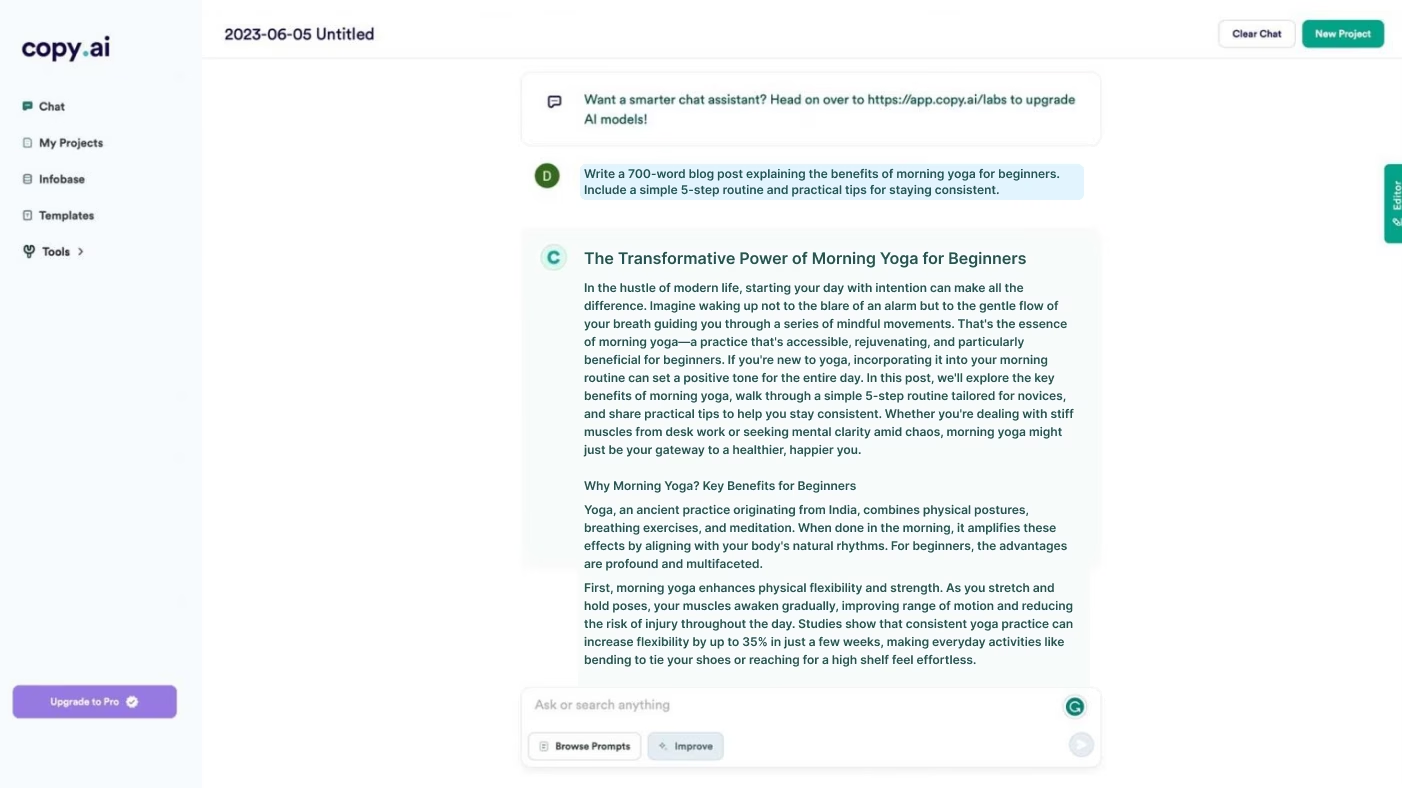
Or even better, provide an outline yourself and ask the AI to expand on it. Structured inputs almost always lead to more useful drafts. Once you've given the right direction, the AI can generate a draft of any sort: blog post, caption for social media, video script… Instead of a blank page, you'll have a concrete starting point.
Editing, Optimizing, and Fact-Checking with Human Oversight
AI drafts are fast, but they're not perfect. Always edit for clarity, brand voice, and accuracy. Besides that, you should also fact-check statistics and references, since models sometimes tend to "hallucinate" details.
Alongside this review, it's a good idea to optimize the piece. Refine the headline for SEO, tighten your CTAs, restructure paragraphs for readability…
Whatever you do, remember it's the human judgment that turns an AI draft into content that truly connects with your audience.
Scaling Content Marketing Strategies with AI
Once you're comfortable with the basics, you can start using AI as a multiplier. In plain English, you can turn a blog post into social snippets, a newsletter, or something else you might need, which is a typical way marketers use AI tools in their everyday jobs. You can also set up templates for recurring content. That way, AI handles the repetitive parts while you focus on strategy. This approach lets small teams act like big ones, scaling without burning out.
Integrating AI Into Existing Tools
AI doesn't have to live in a separate platform. Many CRMs, CMSs, and design tools now include AI features, from HubSpot's AI writing assistant and Canva's AI design tools to Notion AI for knowledge management.
Integrating AI into the tools you already use streamlines your workflow and reduces friction. Instead of switching between platforms, you can generate, edit, and publish content in one place.
Recommend Studio
While most AI content tools start with a blank prompt, Recommend Studio flips the script entirely. Instead of guessing what to create, it begins with intelligence – scanning real-time cultural signals, trending conversations, and influential publications to surface exactly what your audience cares about right now.
This approach solves one of the biggest challenges in AI content creation: knowing what to ask for in the first place. Rather than staring at an empty prompt box or wondering what topic might resonate, Recommend Studio presents you with data-driven insights about emerging trends, audience interests, and content gaps your competitors haven't filled yet.
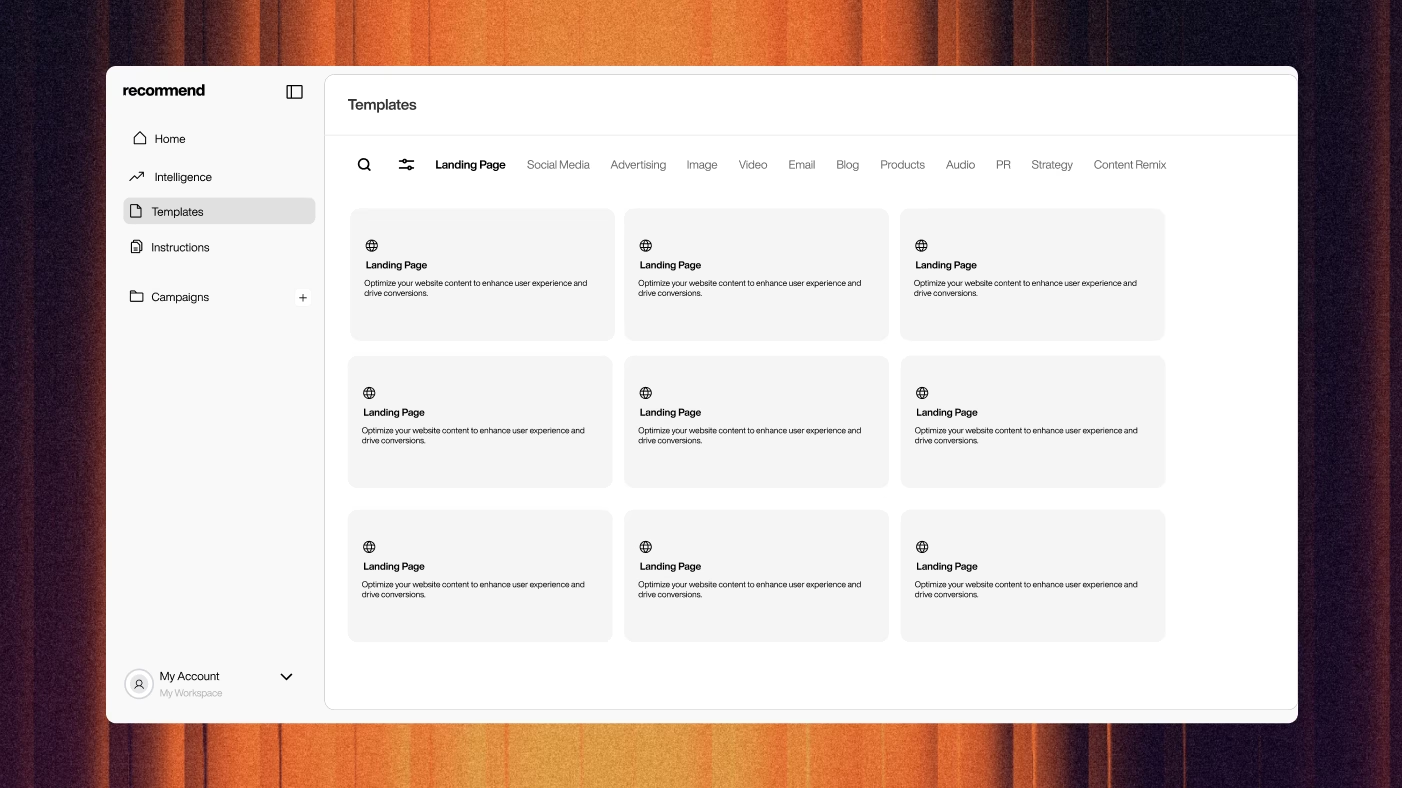
From there, the creation process becomes remarkably streamlined. Studio's templates span every major content format - social posts, blog articles, ad copy, video scripts, landing pages - all designed to work with the intelligence it's already gathered.
For content creators and marketing teams, this means moving from reactive content creation to proactive trend leadership. Instead of following what's already popular, you can spot what's gaining momentum early and create content that positions you ahead of the conversation.
Types of AI Content Creation
AI content creation comes in different forms, depending on the type of content you need. Here are the main categories and how they work.
Generative AI for Long-Form Content
This is where AI helps with bigger pieces like blog posts, articles, or reports. You give the system a prompt or outline, and it produces a first draft you can refine. It's not about publishing instantly, but about speeding up research and writing so you have a strong starting point.
Automated AI for Short-Form Content and Distribution
AI also handles quick, repeatable content: social captions, ad copy, email subject lines, and snippets. Many tools can even repurpose a blog post into social posts and schedule them automatically. This saves time on the repetitive side of marketing.
AI-Driven Optimization
Here, AI doesn't create new content but improves what you already have. It can suggest stronger headlines, test CTAs, or restructure a post for SEO. The goal is to make existing content perform better with less manual effort.
Visual and Audio AI
As you already know, AI isn't limited to text. Tools now generate images, infographics, voiceovers, and even video clips. That also makes it easier to expand one idea into multiple formats. For example, you can turn a blog post into an infographic, a narrated podcast, or a short video.
Best AI for Content Creation
Leading AI Writing Tools
These tools focus on turning prompts and outlines into marketing-ready copy.
Jasper is built for teams, with brand voices, templates, and workflows that help keep tone consistent across blogs, ads, and emails. It's especially strong on collaboration, style guides, and scaling output for marketing departments.
Copy.ai is geared toward growth teams. It offers prebuilt workflows for product launches, sales outreach, and social campaigns.
ChatGPT is great for brainstorming, outlining, and transforming source material into different formats. When given clear instructions, it produces structured and reliable outputs.
Other AI writing tools: Claude, Anyword, Writesonic, Gemini, Copilot…
AI Tools for Visual Content
These platforms generate or edit images and graphics directly from text prompts.
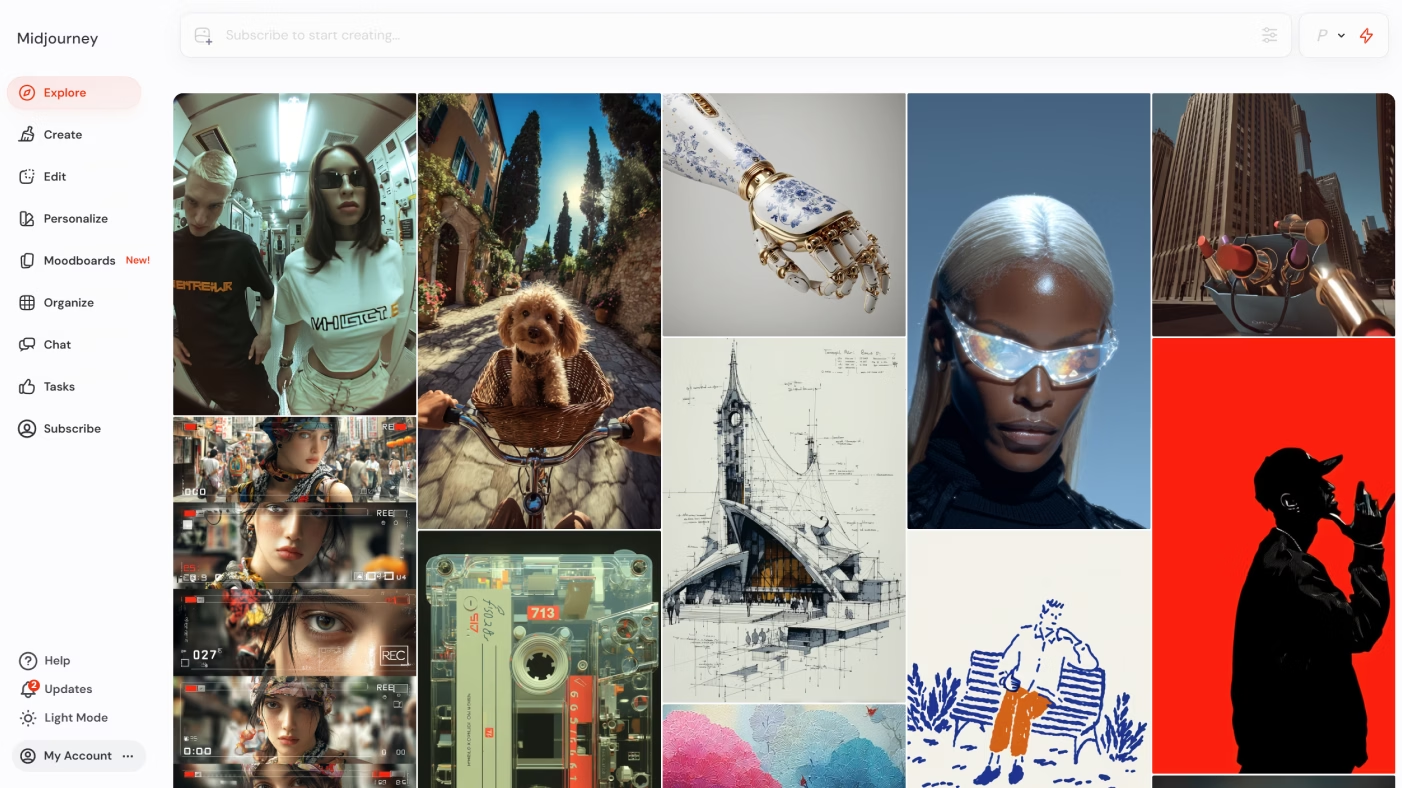
Midjourney is known for producing highly aesthetic, detailed images with strong artistic styles. If you need polished, eye-catching visuals, Midjourney might be your best shot.
DALL·E stands out for its editing capabilities, allowing you to add, remove, or extend parts of an existing image.
Canva's AI features are designed for speed and accessibility, helping non-designers turn prompts into usable graphics, resize them instantly, and apply brand templates. It's probably the most practical solution for everyday marketing content.
Other AI tools for visual content: AdCreative AI, Fotor, Picsart…
AI Video Creation Platforms
These tools help you produce videos from text or automate editing tasks.
Synthesia turns written scripts into videos with realistic AI presenters and avatars. It's most often used for training, product explainers, and localized video content that needs to be scalable.
Pictory specializes in converting long-form text, such as blog posts or scripts, into short, captioned videos using stock footage.
Other AI video creation platforms: Runway, Lumen 5, Veed.io, Wisecut, InVideo…
AI Audio and Voice Tools
These tools generate realistic voiceovers or make editing audio easier.
Descript lets you edit audio and video by editing text, with features like overdubbing voices and removing filler words automatically. It saves significant time in post-production for podcasts and video.
ElevenLabs is known for ultra-natural text-to-speech and advanced voice cloning. It's ideal when you need consistent narration across multiple formats or want to localize content into other languages.
Other AI audio and voice tools: Murf.ai, Play.ht …
Integrated Marketing Suites with AI
These platforms don't just generate text or images; they weave AI directly into the tools teams already use every day.
That means you can draft blog posts inside your CMS, create email copy within your CRM, or design on-brand graphics without leaving your design suite.
Besides convenience, the goal is also to keep content aligned with existing workflows, campaign data, and brand guidelines.
HubSpot AI integrates content generation into its CRM, helping marketers draft emails, landing pages, and blog posts tied directly to campaigns and customer data.
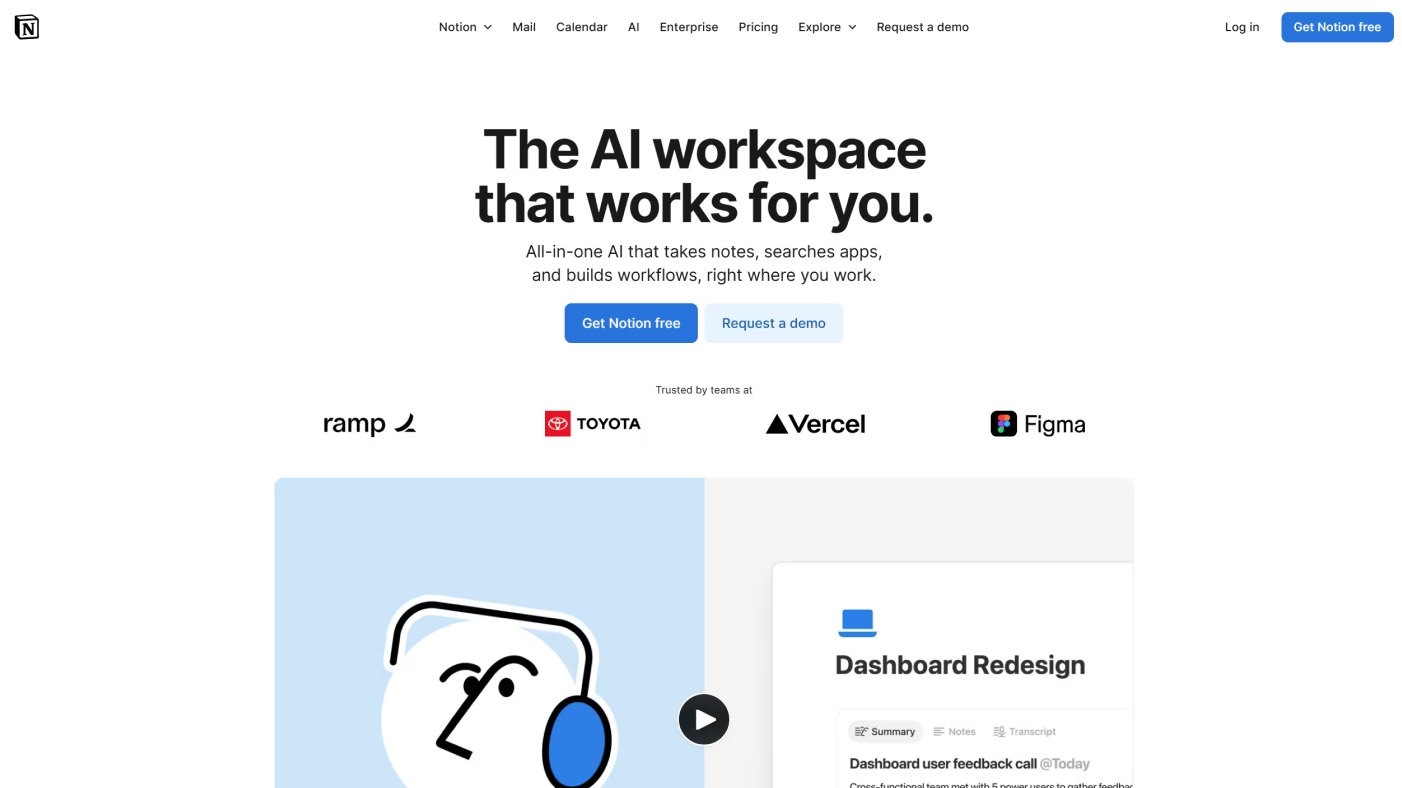
Notion AI works inside Notion docs to summarize research, draft briefs, and restructure notes. It's particularly useful for teams that collaborate on planning and content development in one workspace.
Adobe Firefly, part of Creative Cloud, brings AI into tools like Photoshop and Illustrator with features for generating images, text effects, and smart edits. It's a good choice for designers who want to use AI without leaving the Adobe tools they already know.
Strengths and Limitations of Each Category
Writing tools
Strengths: Rapid ideation, consistent tone with brand profiles, multi-format outputs.
Limitations: Can sound generic without strong briefs; facts still need verification.
Visual generators
Strengths: Fast, striking imagery; style exploration; cheap iterations.
Limitations: Brand fidelity can drift; licensing/ethics considerations; prompt learning curve.
Video platforms
Strengths: Scales explainer/training content; repurposes blogs into social clips.
Limitations: Avatars/stock can feel canned; advanced edits may still need a human editor.
Audio/voice
Strengths: Consistent narration at scale; multilingual options; podcast cleanup.
Limitations: Voice realism varies; disclosure and consent rules apply for cloning.
Integrated suites
Strengths: Less tool-switching; content tied to CRM/brand kits; smoother team workflows.
Limitations: "Generalist" features can be lighter than specialist tools; vendor lock-in risk.
Benefits of AI Content Creation for Small Businesses
For small businesses, AI is much more than just a nice-to-have. It could literally mean the difference between struggling to keep up with content demands and building a steady, professional online presence.
Here are the biggest benefits, along with a few cautions and tips for making AI work at a smaller scale.
Efficiency Gains for Lean Teams
Small teams often wear many hats, and content creation can feel like a time sink. AI tools speed up the heavy lifting: drafting blog posts, writing product descriptions, or generating social captions... Instead of spending hours on a first draft, you can get something usable in minutes.
Scaling Output Without Scaling Headcount
For small businesses, hiring more writers or designers isn't always realistic. AI makes it possible to produce more content without growing your payroll. A 2025 survey of 1,000 SMB marketers found AI saves ~13 hours per week and reduces monthly operational costs.
Creativity and Experimentation
AI can also help businesses experiment with new content formats they might not have tried before. For example, a retailer could use AI to turn product FAQs into a podcast script, or a local café could generate quick video ads for seasonal specials. AI keeps the cost of testing low, so you can try things out without much risk and discover what your audience responds to.
Potential Limitations
However, we should keep in mind that AI isn't a magic solution. Left unchecked, it can produce generic or inaccurate content. Without editing, brand voice can drift, and credibility can suffer. There's also the temptation to over-rely on AI and prioritizing quantity over quality.
Future of AI in Content Creation
AI is moving fast, and today's tools are just the beginning. For small businesses and marketers alike, understanding what's coming next can help you stay ahead of the curve instead of playing catch-up.
Here are some of the biggest shifts on the horizon.
Rise of Multimodal AI
Until now, most AI tools specialized in one format. Multimodal AI changes that by combining them. Imagine drafting a blog post, generating an infographic to go with it, and creating a short video summary – all from the same prompt.
We're already starting to see this in action. Canva's Magic Studio can pin up on-brand designs, images, and even short videos from a single input. Adobe's Firefly integrates text-to-image and video tweaks directly into Creative Cloud apps, letting designers keep everything in one workflow.
In the future, businesses will be able to create entire campaigns through one integrated process.

Hyper-Personalization and Predictive Content Delivery
AI is getting better at understanding not just what people search for, but what they're likely to need next. That means businesses will be able to deliver more personalized content, tailored to specific audiences and even individual preferences.
AI-Human Collaboration as the New Standard Workflow
As we mentioned a couple of times in this blog post, the future isn't about AI replacing people. It's about people and AI working side by side. In this combination, AI can handle the repetitive, time-consuming parts of content creation, while humans provide creativity, strategy, and empathy.
Regulatory and Ethical Considerations
As AI becomes more common, questions about ethics and regulation are growing. Concerns include plagiarism, copyright, misinformation, and bias in generated content. Businesses need to be aware of these issues and use AI responsibly.
We can also expect governments and industry bodies to introduce clearer rules around disclosure and the use of AI-generated content. For small businesses, that means staying informed and building ethical practices now, so you're prepared as the landscape evolves.
How Recommend Studio Fits Into This Future
As AI content creation evolves toward multimodal capabilities and hyper-personalization, Recommend Studio is positioned at the intersection of these trends. While most platforms focus on generating content after you decide what to create, Studio's intelligence-first approach becomes even more valuable in a future where audiences expect highly relevant, timely content.
Also, this predictive element aligns perfectly with the shift toward AI-human collaboration. Rather than replacing human creativity and strategy, Recommend Studio amplifies it by providing the market intelligence that informs smarter content decisions.
Conclusion
AI content creation has quickly moved from an experimental idea to a practical tool that saves time, cuts costs, and makes it easier for even the smallest teams to produce high-quality content. From drafting blog posts to generating visuals and turning one idea into many formats, AI makes it easier for businesses to stay consistent, creative, and competitive without overextending resources.
The key, as we've seen, is balance. AI can accelerate workflows and open the door to new possibilities, but human judgment is what ensures accuracy, brand voice, and genuine connection with an audience. The future points toward deeper integration, more personalization, and seamless collaboration between people and AI, which is a shift that's already reshaping marketing.
For small businesses especially, the message is clear: adopting AI isn't about chasing hype, it's about building smarter, more scalable content strategies. Used thoughtfully, it's a partner that can help you work faster, test more, and deliver content that truly resonates.