How Platforms Like Recommend Are Reshaping the Speed and Quality of Digital Marketing
A practical look at platforms that link trend detection to execution, enabling faster workflows, consistent quality, and measurable results.
Marketing has lived with a false choice: move fast or make it good. Scattered tools, manual briefs, and slow handoffs forced teams to pick one. When a trend hit, you often either shipped something generic to catch the moment or crafted something great and missed it.
A new class of intelligence-to-execution platforms removes that trade-off. They connect the full loop so work moves in one flow: spot a trend → create → scale → launch → learn. Signals become briefs, briefs become on-brand assets, campaigns go live with measurement baked in, and the results feed the next brief.
The outcome isn't just more output. It's faster work that stays high-quality because context travels with it. Platforms like Recommend are built around this idea, turning real-time insight into live campaigns without the tab-hopping and guesswork, which is great both for big enterprises and small businesses alike.
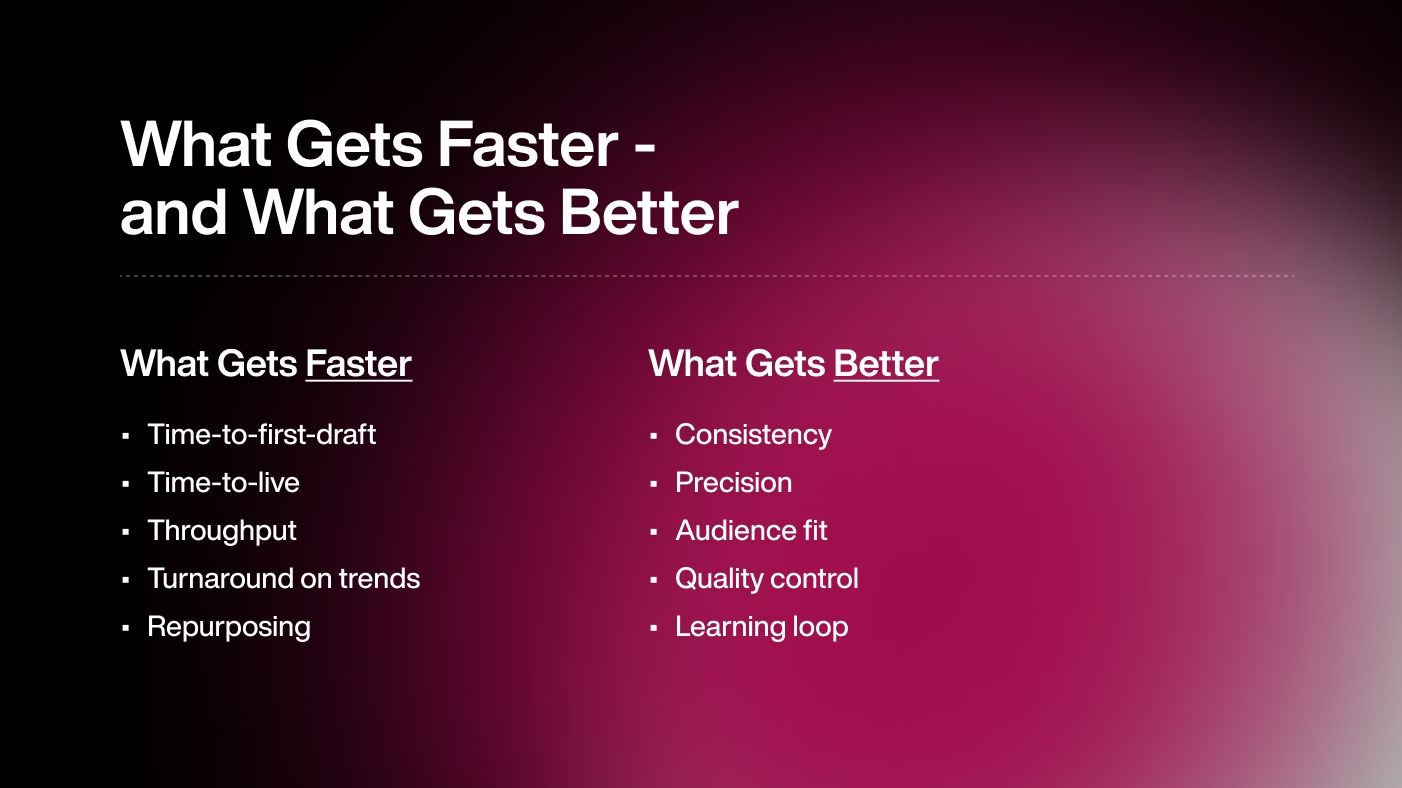
The Old Trade-off: Fast vs. Good
For years, teams have worked around a broken setup. Tools were scattered, so strategy lived in one place, briefs in another, production in a third, and results… somewhere else. Manual briefs took too long to write and went stale before the first draft. Handoffs were slow (copy to design to approvals), so by the time assets were ready, the moment had moved on. And because insights arrived late (post-campaign), lessons didn't shape the next piece.
Here's how that plays out day to day:
A trend pops
Creative starts from scratch, juggling formats and brand rules in separate docs
Approvals bounce across email threads; version control gets messy
Analytics show up a week later, disconnected from the original idea and context
You end up choosing: ship fast (and risk generic, off-brand work) or craft carefully (and miss the window).
Platforms like Recommend are built to remove this trade-off.
What a Modern "Intelligence-To-Execution" Platform Does
A modern platform is a connected system that carries an idea from signal to shipped, and learns as it goes. Instead of hopping between tools, the platform keeps strategy, creation, and results in the same loop, so speed and quality reinforce each other. As Gartner notes, generative AI is transforming marketing operations, augmenting creation speed and changing how teams deliver content.
Here's how that connected system works in practice, step by step.
Spot signals: pull in real activity (trends, conversations, search behavior) and filter by industry/topic to find what's gaining momentum now.
Turn signals into briefs: add context, audience, angles, and goals so teams start with a clear "why," not a blank page.
Produce assets in one workspace: draft and refine ads, posts, pages, and scripts without losing brand voice or bouncing between tabs.
Scale with templates: convert one insight into channel-ready, on-brand variants quickly (social, ads, landing pages, email, video scripts).
Launch, track, and learn: group assets into campaigns, monitor performance, and feed the learning back into future briefs.
Recommend pairs a real-time Intelligence engine with creation and campaign tools, so you start from what's actually gaining momentum, and not guesses. Intelligence surfaces rising topics (from articles, social, video, search) with smart filtering and scoring, then hands them straight to Studio and Templates to turn insight into on-brand assets fast.
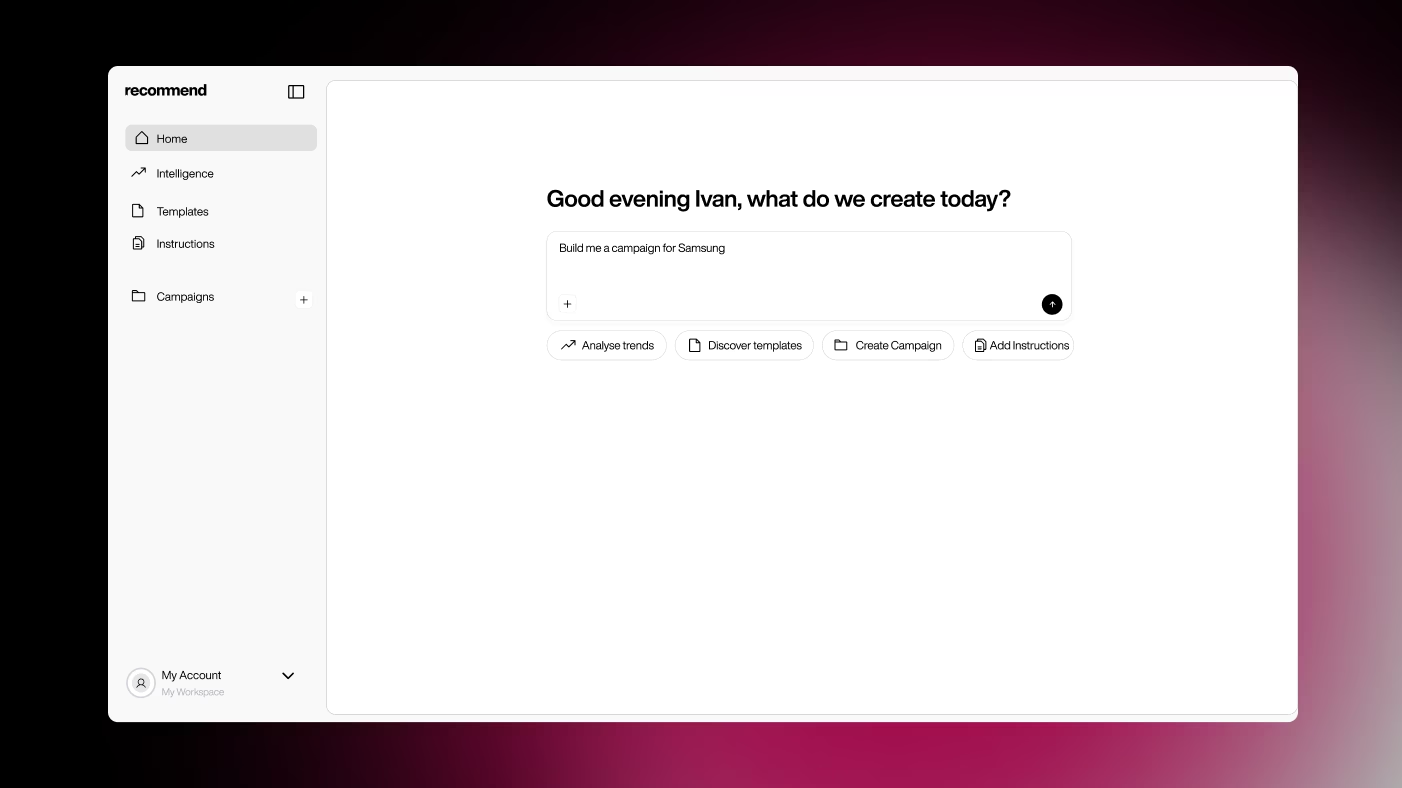
The Intelligence Layer: From Noise to Insight
As we mentioned, great content starts with reality. The intelligence layer pulls signals from multiple sources: articles, social posts, videos, podcasts, forums, search behavior… It then separates what's rising from what's just loud. You get a live, filtered view of topics that matter to your audience right now.
Here's how it works at a glance:
multi-source ingestion: continuous monitoring across channels to capture early signals
trend detection: clustering related mentions to spot patterns (not one-off spikes)
scoring & ranking: weighting by momentum, relevance, and source quality so you can prioritize
industry/topic filters: narrow to your market, product category, and customer interests.
When strategy starts with validated demand, briefs are sharper, angles are clearer, and assets land with more relevance.
Recommend's Intelligence layer surfaces rising topics with momentum scoring, then lets you filter by industry or theme. From there, you can send a chosen signal straight into Studio. That way the brief, the draft, and the final assets all trace back to the same insight.
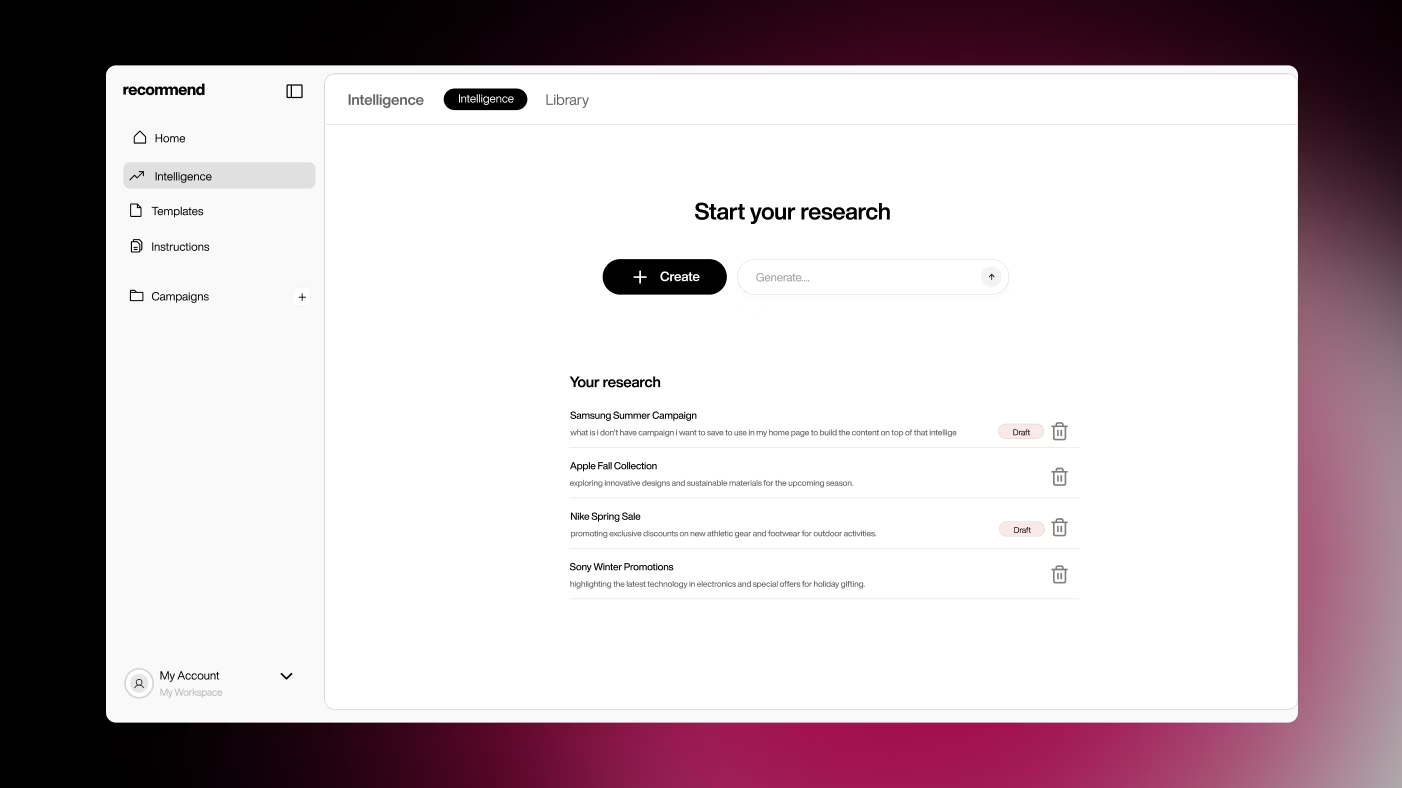
The Creative Workspace: Brief → Draft → Refine in One Place
The creative workspace is where speed meets craft. A unified workspace turns a selected signal into a brief, generates first draft in minutes, and keeps brand controls and human editing in the same flow.
How it works in practice:
brief to start: audience, angle, offer, and goals captured up front, so every draft has a point
on-brand drafting: tone, terminology, and style rules guide generation across formats (ads, posts, pages, scripts)
edit where you create: fact-check, tighten voice, add examples, and approve variations without leaving the workspace
preview and handoff: see assets in channel context, then export or publish.
Fewer tools means fewer delays. Brand guardrails reduce work. And instead of stitching files together, editors spend time on tone, evidence, and clarity.
Templates as Scale - Without the Cookie-Cutter
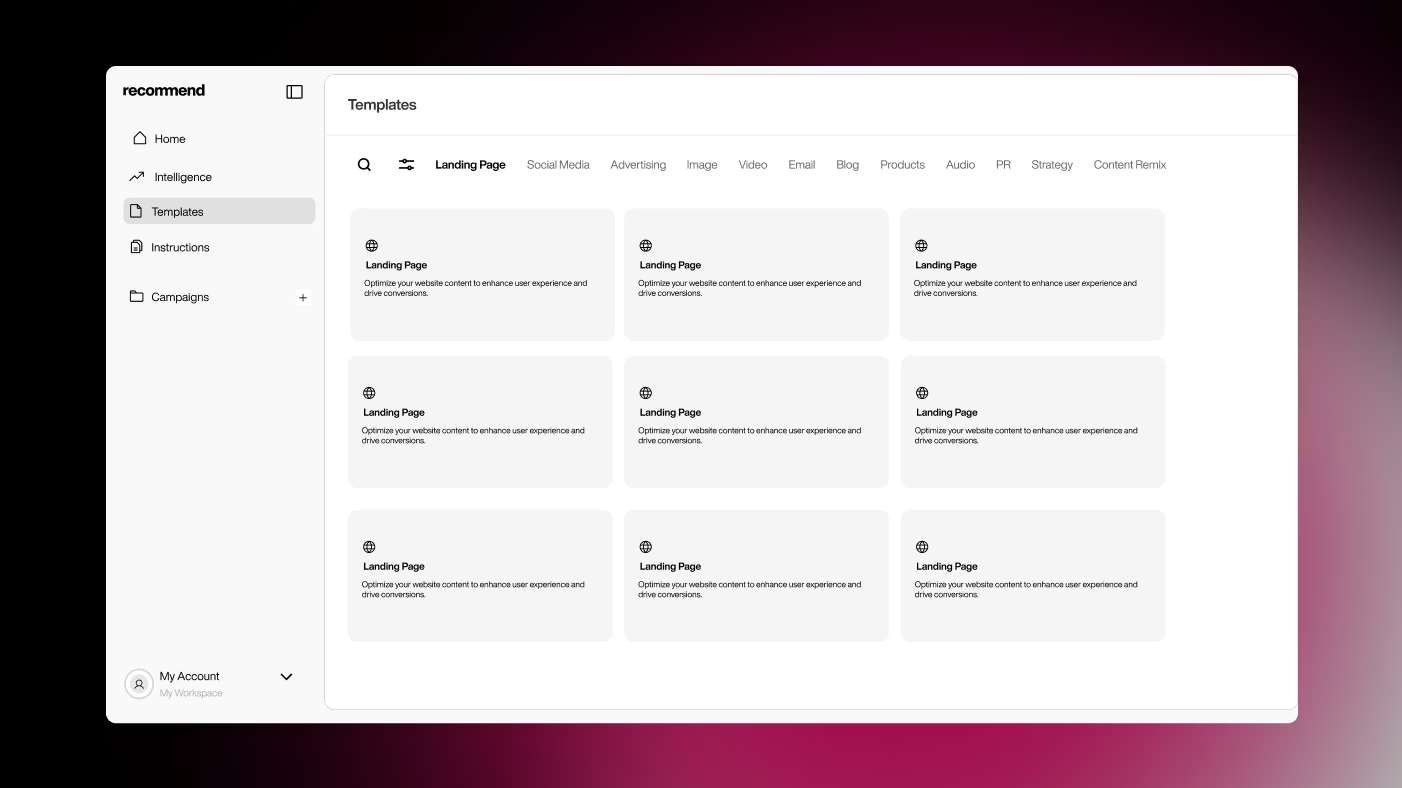
Templates are structured blueprints per channel - Meta ads, IG posts, landing pages, emails, TikTok scripts, case studies - that give you a strong starting point without locking you into sameness. Each template carries the right sections, character counts, and calls-to-action for its channel, so you skip the blank page and go straight to tailoring.
This matters because templates give you a faster start - you're editing, not inventing. Besides that, templates keep quality consistent with proven voice, layout, and CTA patterns, and they stay flexible by adapting outputs to your inputs: offer, audience, tone, and proof points.
How This Fits Your Stack
These platforms sit above channels (Meta, Google, TikTok, email, web) and beside your core systems (CRM, analytics, DAM). They don't replace distribution or data - they connect them. Expect straightforward export/publish options, plus the ops basics that keep teams sane: clear naming/taxonomy, versioning, and approval rules built into the flow. For a forward look at search, personalization, and measurement changes, read how AI will impact content marketing in 2026.
And don't skip the foundations: strong data governance and practical skills are what turn AI adoption into real productivity gains - especially for smaller teams.
Conclusion
Modern marketing doesn't have to choose between speed and quality. Platforms that connect intelligence, creation, templates, and campaigns turn real signals into on-brand assets fast, then feed results back into the next brief. That's how you cut time-to-first-draft, reduce rework, and ship work that actually fits the moment.
If you're mapping this to your stack, think of it as a layer above channels and alongside CRM/analytics; one place where insights become briefs, drafts become multi-asset campaigns, and performance closes the loop. And if you want a step-by-step framework to track results, start with how to measure the ROI of AI content creation.
Platforms like Recommend show what this looks like in practice: start from what's gaining momentum, create in one workspace, scale with templates, and keep context (and quality) intact from idea to publish.