How Will AI impact Content Marketing in 2026
See what 2026 changes for content marketing and how to adapt with AI systems, smarter personalization, shifting search, and performance-focused measurement.
Content is having its "electric motor" moment. In 2026, AI won't just speed things up. It will quietly run the whole conveyor belt: planning, drafting, versioning, publishing, and learning what worked.
The teams that win won't be the loudest; they'll be the ones who pair AI's scale with human taste in a form of sharper strategy, cleaner edits, and honest measurement.
AI and Content Marketing in 2026 - The Big Picture
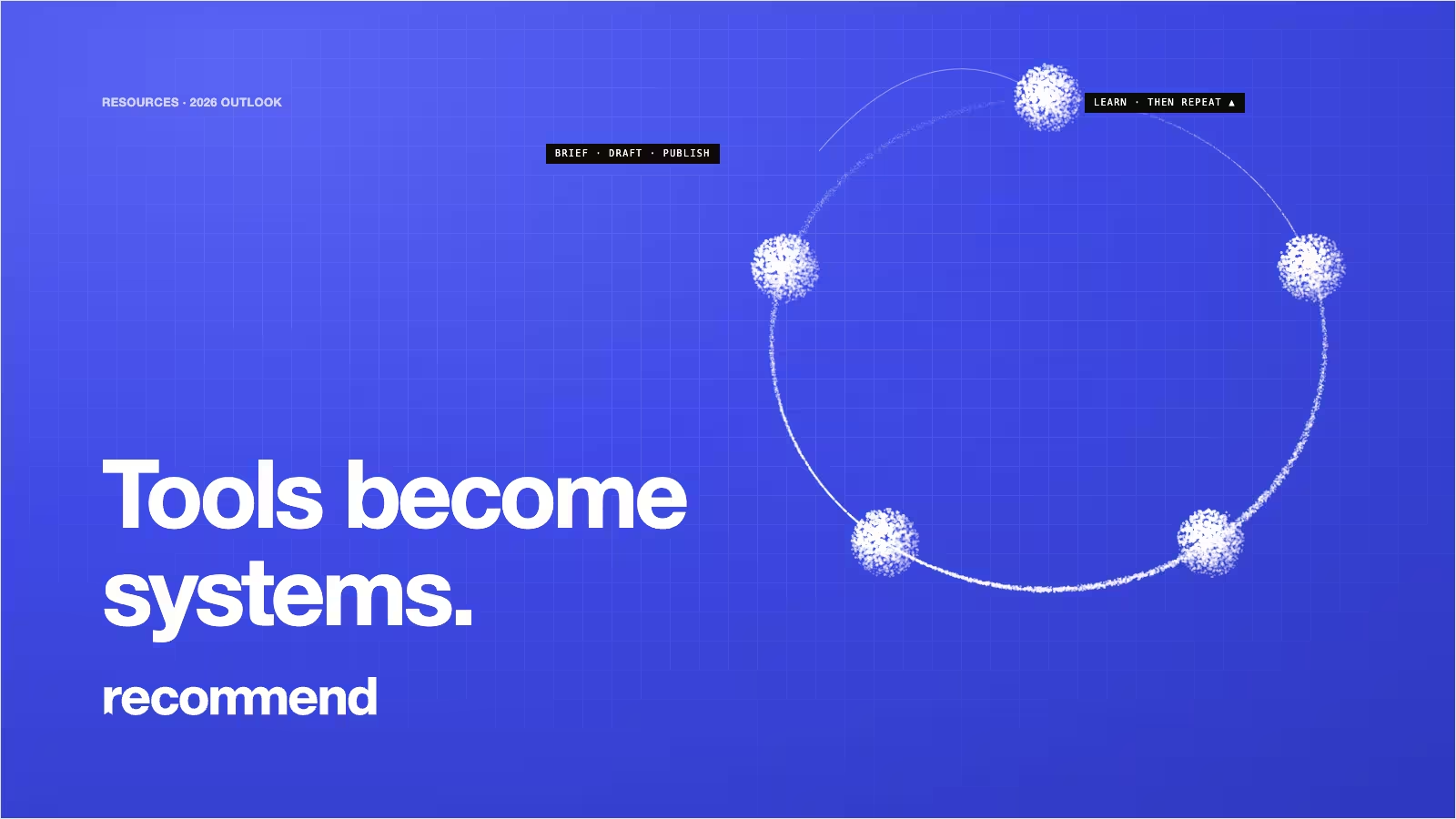
Today, most teams "use AI tools". In 2026, the standouts will run on AI systems. Ideas won't hop between tabs and to-do lists, but move in one smooth loop that includes brief, draft, variations, publishing, learning, and improving. Besides that, fresh CMI data shows 95% of B2B marketers use AI-powered applications, with most still moving from exploratory to established programs. That's just another sign that systems, not one-offs, will define 2026.
What changes for you?
Speed: from weeks to days (or hours) for moving from brief to live.
Scale: one concept becomes multiple channel-ready assets.
Human role: less manual handoff, more oversight on strategy, voice, and quality.
Hyper-Personalization at Scale
Personalization becomes practical. Based on live performance, AI can generate targeted variants for segments and moments without adding headcount. Keep two guardrails in place: limit frequency to protect experience, and keep an editor in the loop to maintain brand tone.
Expect higher relevance and steadier conversion without bigger budgets!
Agentic Workflows Take Over Ops
In 2026, more teams will move from one-off prompts to agentic pipelines that handle routine steps end to end: brief creation, outline, first draft, variants, distribution, and performance notes back to the brief. Humans set the strategy and the guardrails, and agents do the handoffs.
To make this reliable, standardize metadata (titles, tags, topics), approvals (who signs off and when), and routing (where assets go next). The payoff is fewer bottlenecks and cleaner feedback loops across channels.
Creation Speed & Multimodal Content
Search & Discovery Are Shifting
Measurement: From Volume to Performance
Trust, Transparency & Compliance
As AI takes on more of the work, trust becomes a feature. Be clear about where AI is used, protect customer data, and keep human standards front and center. That's how you avoid "synthetic sameness" and earn credibility with audiences (and legal).
Here's how to do it well!
Disclose smartly: add a simple note where it helps (e.g., "This article was produced with AI assistance and edited by our team").
Human-in-the-loop: do factual review, brand-voice edits, and source checks before publication.
Originality by default: run plagiarism checks; cite sources; avoid rephrased summaries that add no value.
Data hygiene: limit tools to non-sensitive inputs, use role-based access, and review model/data retention settings.
Copyright & rights: use licensed assets; verify usage rights for images, music, and datasets; log attributions.
Bias & safety: spot-check outputs for bias, medical/financial claims, and risky advice; document red-flag categories.
Watermarking/traceability (where possible): keep an internal trail of prompts, edits, and approvers for audits.
Regional compliance: map workflows to GDPR/CCPA (consent, deletion, DPA with vendors) and keep a vendor register.
Team guardrails to codify:
a one-page AI disclosure policy (when/where to disclose)
an editorial QA checklist (facts, tone, citations, claims)
a data use matrix (what can/can't go into tools)
a release log (who reviewed, when, and with which tool versions)
How Recommend Studio Can Boost Your Content Marketing in 2026
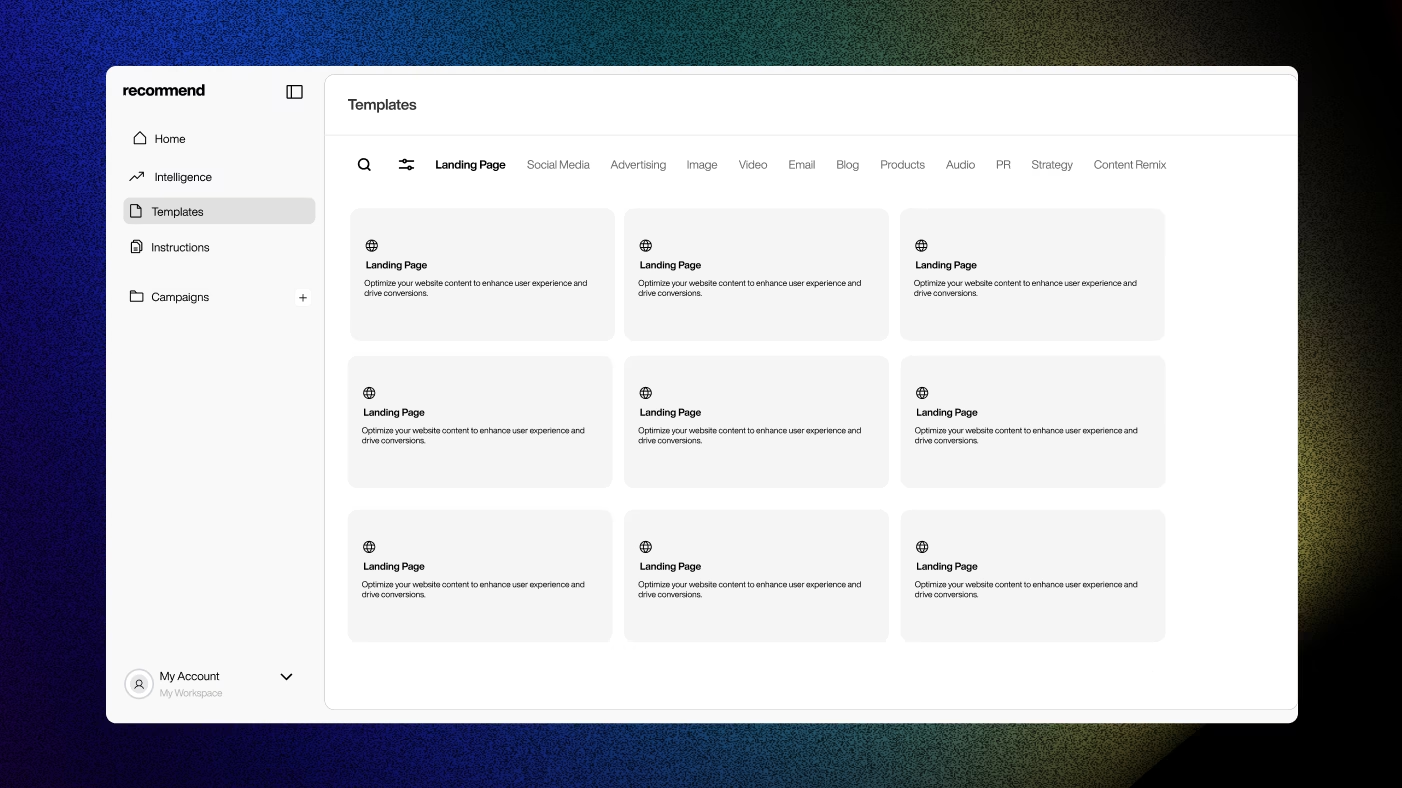
Recommend Studio is an intelligence-driven content engine. It starts with real-time cultural signals – what your audience actually cares about now – and turns those insights into ready-to-publish assets in minutes.
Why it helps in 2026:
from noise to insight: surfaces topics from online conversations and key publications, so briefs aren't guesswork;
speed to output: templates for posts, ads, pages, articles, and video scripts turn ideas into consistent, on-brand content fast;
scale with control: produce more without adding headcount, while editors keep voice, accuracy, and quality tight;
stay ahead: move seamlessly from trend detection to campaign execution with content that resonates and performs.
Conclusion
AI will reshape content marketing in 2026 as the system that plans, produces, personalizes, and learns at scale. The advantage goes to teams that combine that scale with strong human judgment: clear strategy, steady editorial quality, and honest measurement. And that starts with priorities: reliable workflows, useful personalization, formats that travel (text, video, audio), and metrics that prove performance, not just output.
Lead with a focused pilot. Automate a single workflow, put guardrails in place, test for 8-12 weeks, and double down on what works. For a practical look at the system that lets speed and quality coexist, explore how platforms like Recommend are reshaping the speed and quality of digital marketing. And for a quicker jump from insight to output, Recommend Studio helps you identify what matters and publish fast.