How AI Content Engines Help Small Businesses Compete with Enterprises
This post explores how AI-powered content tools help small teams create smarter, faster, and more engaging content, giving them the edge to compete with larger brands.
For decades, the business world has played favorites. Big enterprises had the resources, data, and manpower to dominate, while small businesses had to fight uphill for visibility, efficiency, and time. Competing meant long hours, tight budgets, and the constant feeling of being a step behind.
That balance is now shifting. Artificial intelligence is rewriting the rules of competition. This time, it's not only for tech giants or Fortune 500 companies. Tools that once required million-dollar budgets are now accessible to anyone with a laptop and curiosity.
Among the most powerful of these tools are AI content engines, systems that help create, optimize, and scale content with a fraction of the time and cost. They're helping small teams look, sound, and perform like much larger ones. From writing product descriptions to building marketing campaigns and analyzing engagement data, AI is becoming the quiet partner that lets small businesses punch above their weight.
In this article, we'll explore how AI is leveling the playing field. In particular, we'll explore how content engines can give small businesses the kind of creative and operational power that used to be reserved for the big players.
The Competitive Gap: Why Small Businesses Struggle to Keep Up
Running a small business often feels like competing in a race where the other runners have head starts (and better shoes). Large enterprises enjoy deep pockets, specialized teams, and access to vast amounts of customer data. That means they can test more ideas, move faster, and amplify their message further.
Small businesses, meanwhile, operate under tight constraints. Budgets are lean. Teams wear multiple hats. Marketing, sales, and operations often compete for the same handful of hours and resources. Without scale, even good ideas can struggle to break through the noise.
The digital landscape has only made that gap more visible. Consumers expect instant responses, personalized content, and flawless online experiences - the kind of polish that once required big teams and expensive tools. Competing at that level isn't easy when you're doing everything yourself.
But this is exactly where AI is starting to close the gap.
How AI Levels the Playing Field
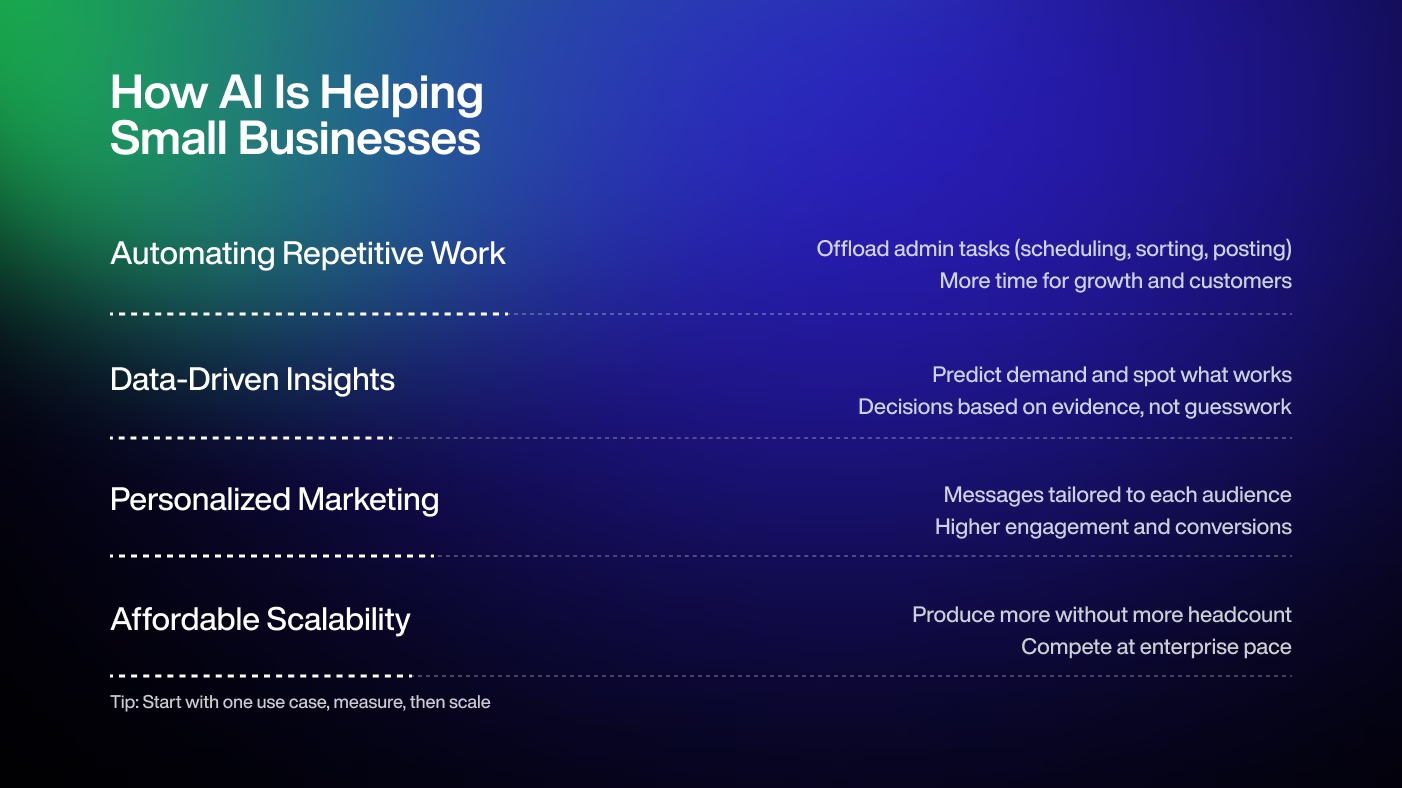
Artificial intelligence is giving small businesses access to capabilities that used to belong only to enterprise giants. It's automating time-consuming work, revealing insights hidden in data, and scaling content and operations without scaling costs. For a closer look at the systems that make this possible, here's how platforms like Recommend are reshaping the speed and quality of digital marketing.
These advancements are what allow small teams to compete with the speed and sophistication of larger organizations.
Automating Repetitive Work
Posting updates, sorting leads, scheduling emails… Every small business has tasks that eat up time but add little value. AI tools can handle much of this grunt work automatically.
By taking over repetitive admin and operational tasks, AI frees up owners and teams to focus on more important stuff like growth, creativity, and customer relationships. What once took hours now takes minutes, and that efficiency compounds over time.
Data-Driven Insights
Enterprises have long used analytics teams to turn data into strategy. Small businesses rarely had that luxury - until now. With AI-powered dashboards and predictive analytics, even a two-person team can make data-backed decisions.
AI tools can analyze customer behavior, forecast demand, or identify which campaigns actually work. Instead of guessing, small businesses can act on evidence, making every dollar and every hour go further.
Personalized Marketing
Big brands built their reputations on personalized experiences. AI now brings that same level of sophistication to smaller players. With chatbots that remember customer preferences and email campaigns tailored to individual behaviors, personalization is no longer a luxury.
AI can segment audiences, adjust tone and timing, and even generate content that feels one-to-one. That way, you'll get stronger engagement, higher conversion rates, and customers who feel seen, and not just sold to.
Affordable Scalability
In the past, scaling content or marketing reach meant hiring more people or outsourcing. And truth to be told, both options can be expensive. But with AI, a single content engine can produce blogs, product descriptions, or social posts at the pace of an entire team.
Not sure how to quantify that lift? Here's how to measure the ROI of AI content creation in a clean, before/after model.
The Power of AI Content Engines
What Exactly Is an AI Content Engine?
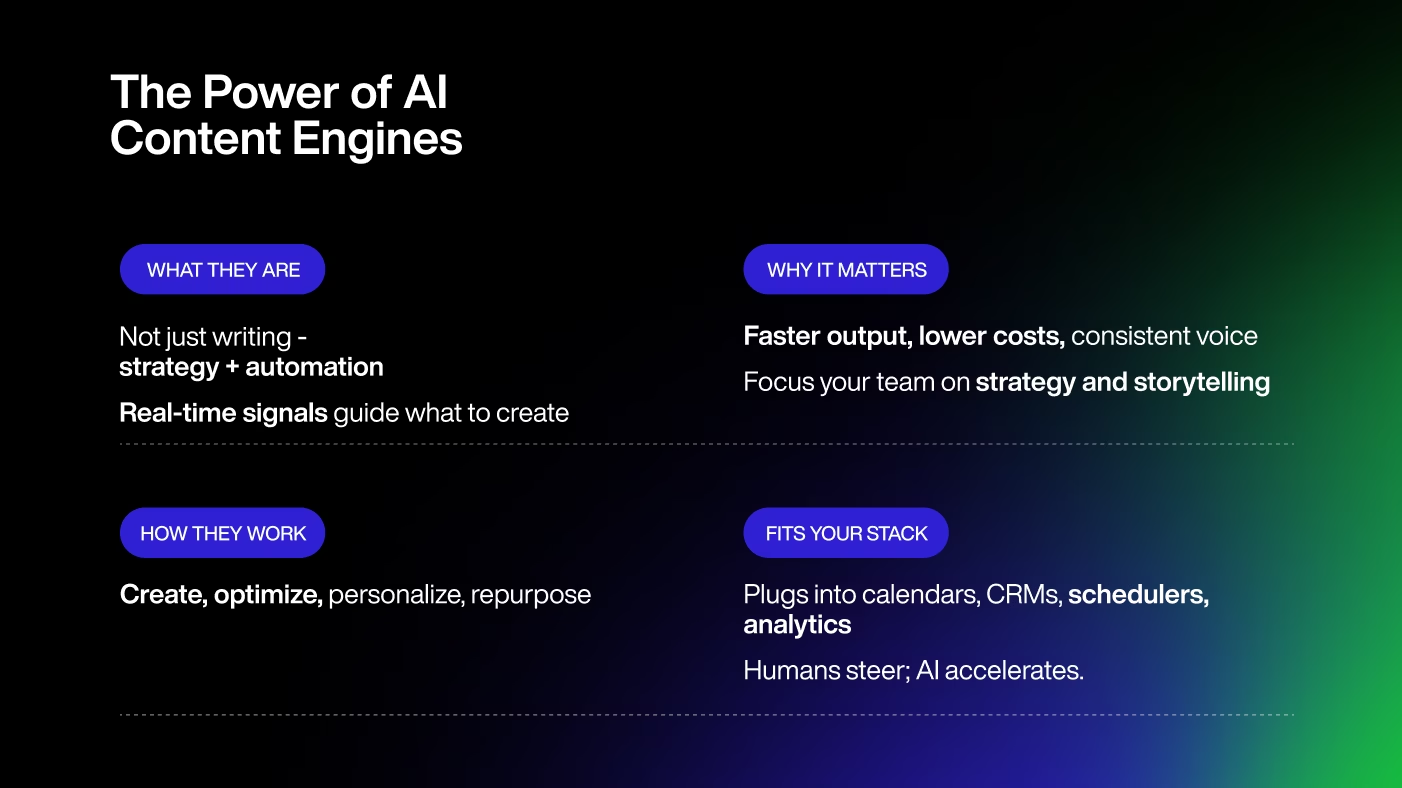
An AI content engine is more than just a writing tool. It's a full system that blends creativity, automation, and intelligence. Instead of relying on human intuition alone, it uses real-time data and audience insights to decide what content to create, when to publish it, and how to make it perform.
Content engines can brainstorm, draft, edit, and optimize at scale, while learning from performance data along the way.
For small businesses, that means having the strategic and production power of a full marketing team, without the overhead.
If you'd like to get an insight to where content engines are headed - multimodal, agents, and measurement - see how AI will impact content marketing in 2026.
How AI Content Engines Work
A strong content engine covers the entire content lifecycle.
Create: It can generate ideas, outlines, and full drafts in minutes, turning concepts into ready-to-edit copy for blogs, ads, or emails.
Optimize: It fine-tunes for tone, clarity, structure, and search performance, ensuring content ranks well and reads naturally.
Personalize: It tailors messages for different audiences, industries, or buyer stages.
Repurpose: It transforms one piece into many formats. A blog becomes a social post, a newsletter, even an ad script, maximizing reach without starting from scratch.
Why They're a Game-Changer for Small Businesses
They also remove the guesswork from content strategy. Instead of debating what to post next, small businesses can rely on data-backed insights: keywords that matter, trends that convert, and formats that perform.
But their biggest benefit is freedom. Instead of spending hours writing, editing, and scheduling, small teams can focus on strategy, storytelling, and customers.
How They Fit Into Everyday Marketing Workflows
Instead of replacing your existing tools, AI content engines plug right into them. They can sync with content calendars, CRMs, social schedulers, and analytics dashboards to streamline your marketing flow from planning to performance marketing.
The human role, of course, doesn't disappear, but it shifts to refining, reviewing, and steering the creative direction.
Recommend Studio
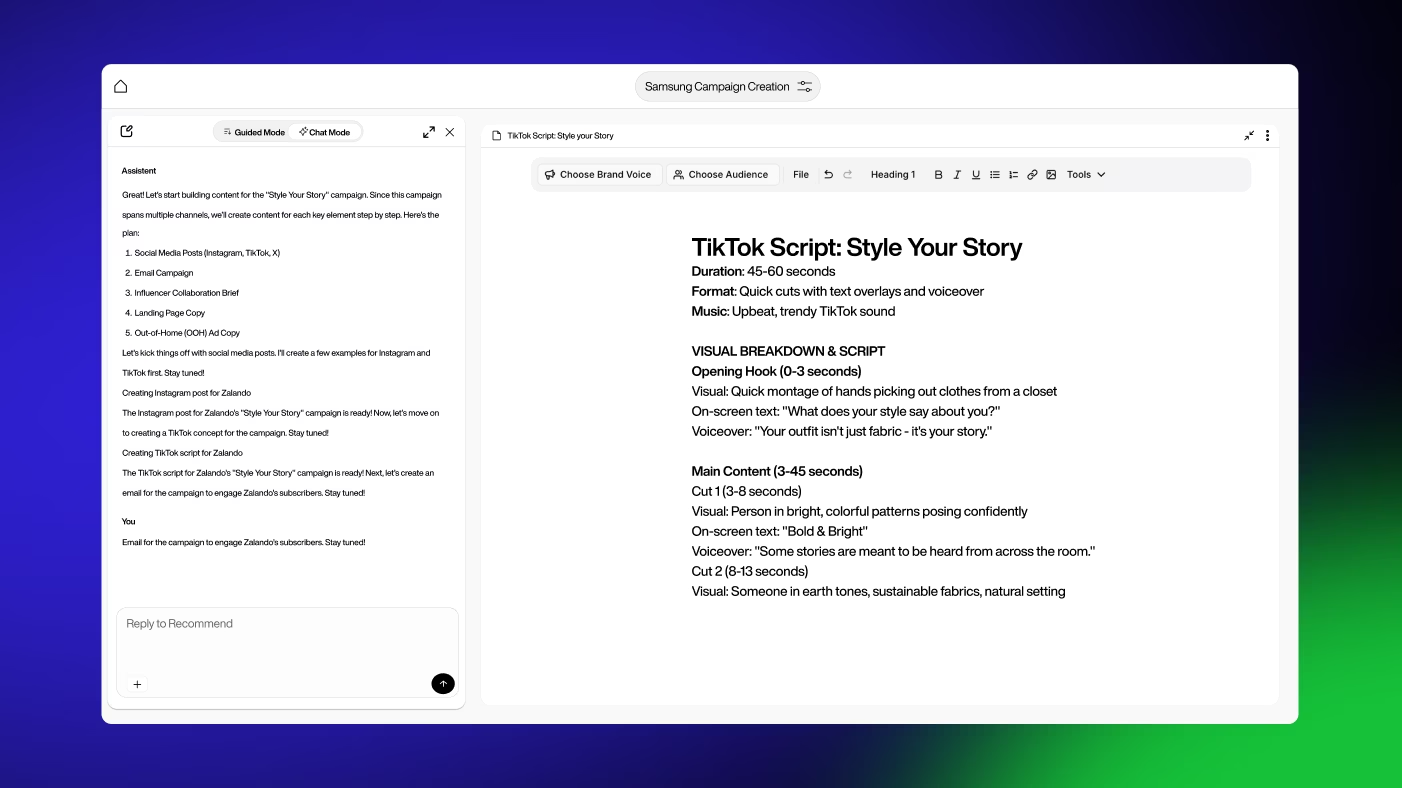
Among the new generation of content engines, Recommend Studio stands out for how it connects intelligence with execution. It doesn't just generate copy. Instead, it starts with real-time cultural signals, trending conversations, and influential sources to uncover what truly matters to your audience right now.
Moreover, with templates for social posts, ads, landing pages, articles, and even video scripts, Recommend helps small teams move from idea to publication in minutes. The result is high-quality, relevant content that actually connects, created at the speed modern audiences expect.
How Small Businesses Can Start Using AI Effectively
Getting started with AI doesn't require a big budget or a technical team - just focus and curiosity.
Start where it hurts most: identify repetitive or time-heavy tasks (content creation, social scheduling, customer support).
Use what's already available: many tools you already use (from CRMs to email platforms) now have AI built in. Start there before adding new software.
Keep the human touch: use AI for ideas, drafts, and data, but always refine tone, brand, and accuracy yourself.
Measure and scale: track results, test, and double down on what works. Small, consistent wins compound fast. Salesforce's global SMB survey finds that AI-adopting small businesses are already seeing gains in productivity, customer experience, and revenue growth
AI adoption works best when it's intentional, one smart step at a time.
Challenges and Best Practices
AI gives small businesses incredible leverage, but it's not without its challenges. The biggest risk is overreliance. In other words, we shouldn't expect AI to think or create without human input. These tools are powerful, but they still need guidance, context, and review. Without that, it's easy to lose the human perspective that makes content authentic. Deloitte's latest State of Generative AI in the Enterprise (2024) backs this up: as adoption accelerates, leaders cite governance and talent gaps among their top concerns.
There's also the issue of inconsistent quality and tone. AI can generate impressive results, but without human editing, outputs can feel generic or off-brand. And then there's data privacy - a critical factor for any business. Always know where your data is stored, how it's being used, and whether your chosen tools comply with relevant regulations.
The solution is balance. Keep humans in the loop: review, refine, and personalize every piece of content. Use verified data and trusted platforms. Treat AI as a creative partner, not a shortcut.
Looking Ahead
AI is becoming more accessible every day. Low-code and no-code platforms are putting once-complex tools in everyone's hands, and that's good news for small businesses.
Those who start early will gain more than efficiency. They'll gain insight, speed, and adaptability. The next wave of competition won't be about who has the biggest budget, but who learns and experiments the fastest.
Conclusion
AI content engines have redefined what's possible for small businesses. They bring speed, creativity, and intelligence to the table, helping small teams compete with (and often outperform) much larger ones.
The opportunity is here, and it's practical: start small, learn fast, and scale smart. AI doesn't replace your voice; it amplifies it. Businesses that begin exploring these tools today will be better prepared for tomorrow's competition.