Market Intelligence vs Market Research: What's the Difference?
Two terms, two different tools — a clear breakdown of what separates market intelligence from market research and when to use each.
Market research answers a specific question. Market intelligence answers an ongoing question. Both matter, but confusing them leads to the wrong tool for the job. In practice, that confusion is common enough to cause real problems: teams commissioning research when they need continuous monitoring, or relying on a year-old study when the market has already moved on.
This article breaks down the core difference between the two, when each one is the right call, and how the best marketing teams use both together.
The Core Difference
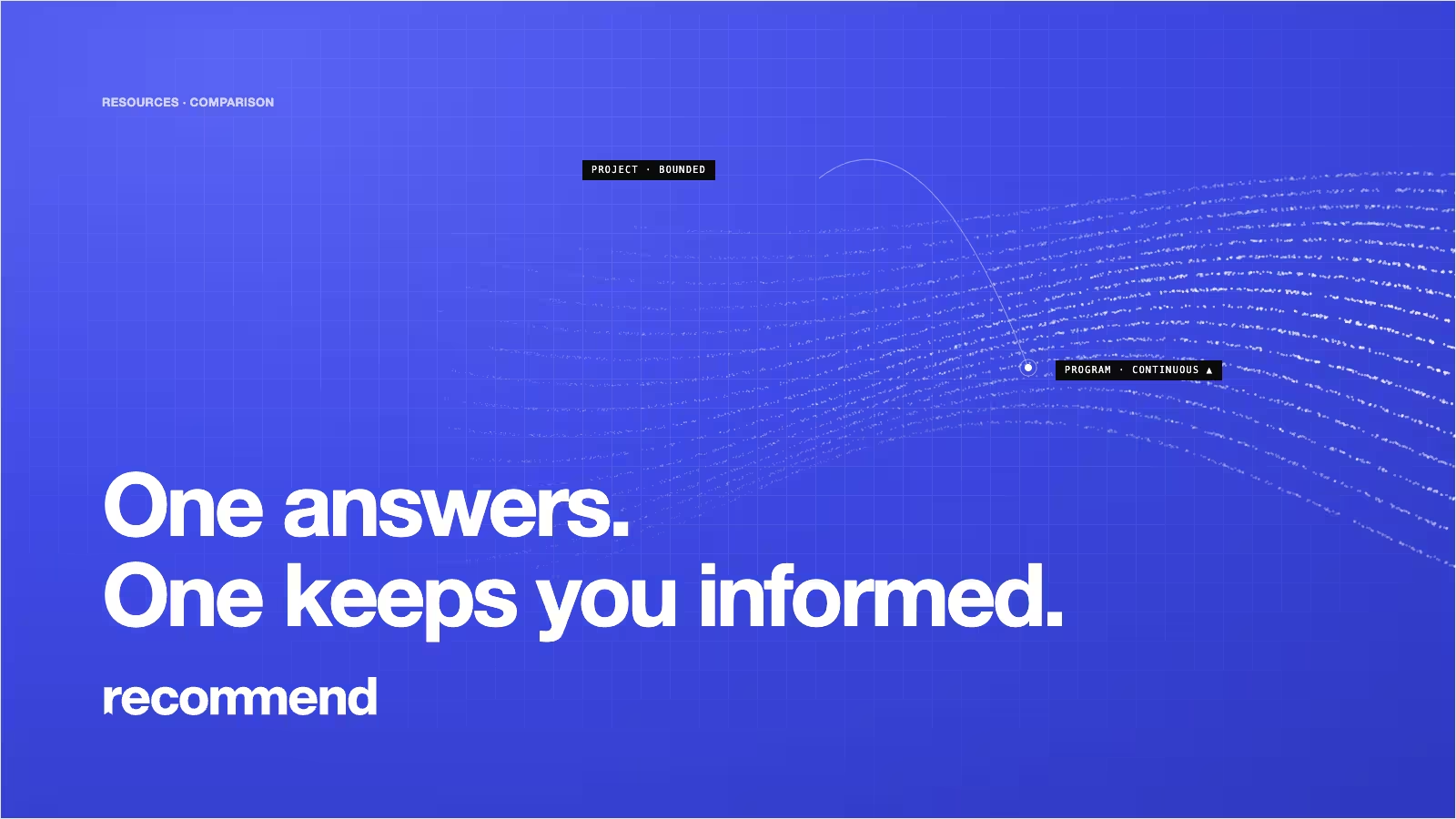
The distinction sounds simple, but it has real consequences for how marketing teams structure their work. Market research is bounded. It has a brief, a methodology, a timeline, and a deliverable. Once the question is answered, the project closes. Market intelligence doesn't close. It runs continuously, updating as the market moves, and feeds into decisions that weren't even on the agenda when the system was first set up.
The other key difference is scope. Market research is typically focused on a specific audience or question. Market intelligence casts a wider net, monitoring competitive landscape, industry trends, regulatory shifts, and consumer sentiment simultaneously, across multiple sources, all the time.
In practice, the two serve different masters. Market research serves a decision — a product launch, a campaign, a market entry. Market intelligence serves a function, keeping the marketing team continuously informed about the environment they're operating in.
What Is Market Research?
Market research is a structured, project-based process for answering a specific question about a market, audience, or product. It has a defined scope, a methodology chosen to fit the question, and a clear endpoint. When the deliverables are landed, the project is done.
The methodology is typically primary, meaning data is collected directly from the source for the specific question at hand. Surveys, interviews, focus groups, usability testing, and concept validation studies all fall into this category. The data doesn't exist until the research creates it, which is what makes market research precise but also resource-intensive.
The key characteristics of market research are:
Project-based and time-limited. Market research has a start date and an end date. It's scoped, budgeted, and delivered.
Question-driven. The process begins with a specific, pre-defined question. The methodology is built around answering it.
Primary data collection. Data is gathered from scratch — surveys, interviews, or observational methods — specifically for the research brief.
Commissioned and managed. Most market research is run by a dedicated research team, an internal insights function, or an external agency.
What Is Market Intelligence?
Market intelligence is the ongoing process of monitoring the external environment a brand operates in — competitors, consumers, industry trends, and macro signals — to keep marketing decisions grounded in what's actually happening in the market. Unlike market research, it isn't triggered by a specific question. It runs continuously, updating as conditions change, and feeds into decisions across the entire marketing function.
The data sources are primarily secondary. Existing information is gathered, aggregated, and analyzed from across the market rather than collected from scratch. Industry reports, news monitoring, social listening, search trend data, competitor tracking, and community signals all feed into a market intelligence system. The scale and complexity of managing these sources is why most teams rely on a dedicated platform to automate or semi-automate the process.
Key characteristics:
Continuous and ongoing. There's no end date. Market intelligence is a program, not a project. It runs in the background and surfaces relevant signals as they emerge.
Broad in scope. It monitors the full external environment simultaneously — competitors, customer sentiment, industry trends, regulatory changes, and macro shifts.
Secondary data sources. Rather than generating new data, market intelligence aggregates and analyzes existing signals from across the market.
Platform-driven. Because of the volume and variety of sources involved, market intelligence is typically automated or semi-automated through a dedicated intelligence platform.
Feeds both strategy and tactics. Market intelligence informs long-range planning — annual GTM strategy, budget allocation, market entry decisions — as well as real-time tactical calls like campaign timing and content planning.
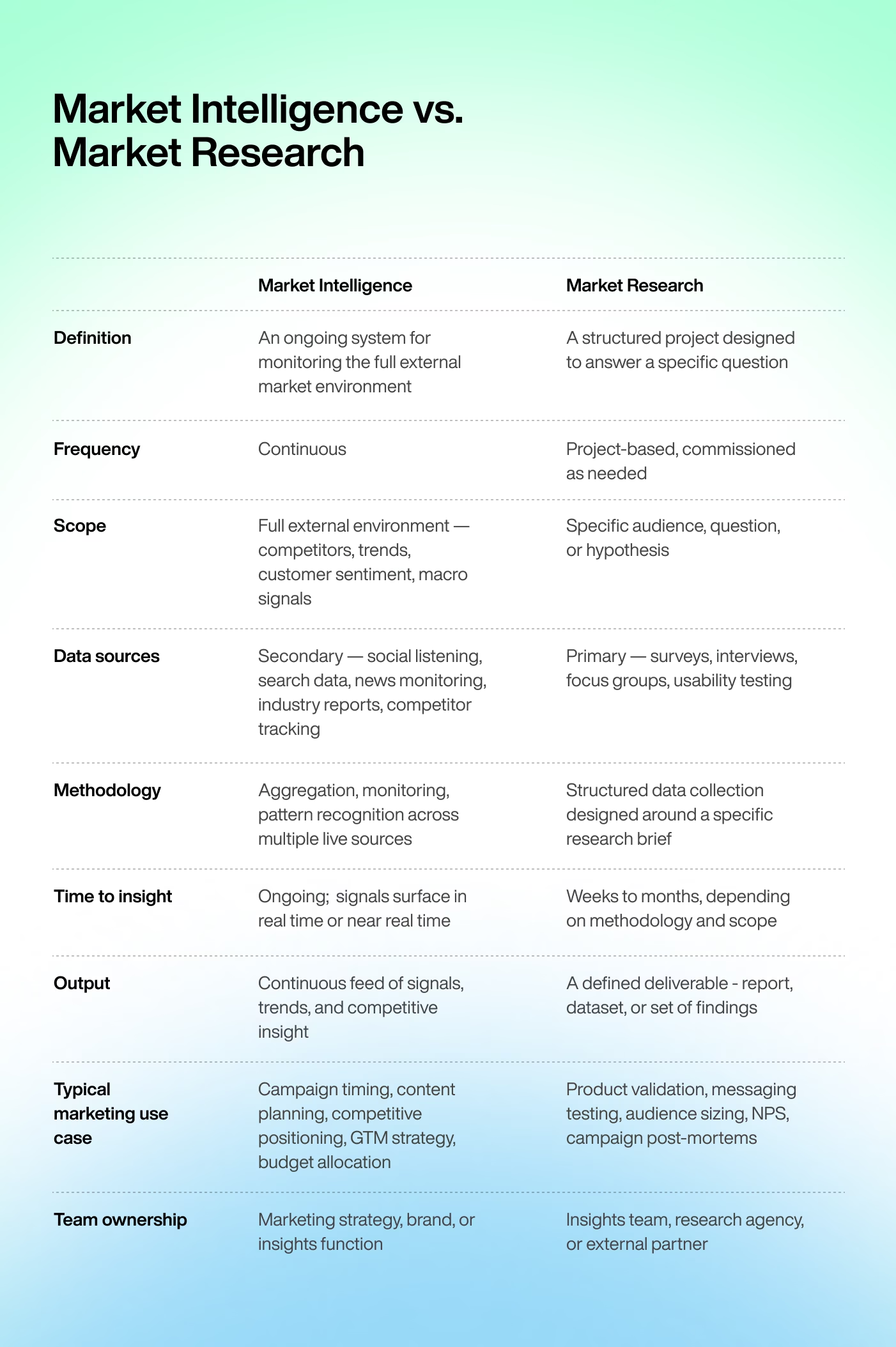
Side-by-Side Comparison Table
The two are complementary, and not interchangeable. Here's how they compare across the dimensions that matter most.
When to Use Market Research
Market research is the right tool when you have a specific question that needs a definitive answer before a major decision is made. Here are the scenarios where it earns its place.
Validating a new product concept. Before committing budget to development, research can tell you whether the concept resonates with the target audience, which aspects are most compelling, and where the gaps are. A concept test or focus group at this stage is significantly cheaper than a failed launch six months later.
Understanding why a campaign underperformed. When results come in below expectations, and the data doesn't explain why, qualitative research fills the gap. Interviews or surveys with the target segment can surface whether the messaging missed, the creative didn't land, or the audience wasn't who you thought it was.
Sizing demand in a new market. Entering a new geography or category without understanding the size and shape of demand is a significant risk. Market research provides the structured evidence — audience size, purchase intent, willingness to pay — that turns a hypothesis into a defensible business case.
Testing messaging or positioning. Before a rebrand, a new campaign platform, or a product launch, message testing with a defined audience tells you which framing resonates and which falls flat. It's one of the highest-ROI uses of research budget available to a marketing team.
Gathering NPS or satisfaction data. Understanding how customers experience a product or service requires asking them directly. Structured satisfaction research provides the baseline and the benchmarks that inform experience decisions over time.
When to Use Market Intelligence
Market intelligence is the right tool when the question isn't a question. It's a continuous need to stay informed about a market that keeps moving. Here are the scenarios where it does its best work.
Monitoring how competitor messaging evolves. Competitors don't announce their positioning shifts — they just make them. A continuous market intelligence system tracks changes in competitor messaging, campaign themes, and content strategy quarter over quarter, so your team isn't catching up at the annual planning offsite.
Detecting an emerging consumer trend before it peaks. By the time a trend appears in mainstream search volume, the early movers have already acted on it. Market intelligence surfaces rising signals — in social conversation, niche communities, and trade press — weeks before they hit the broader market, which is exactly the window where first-mover advantage is still available.
Tracking industry news, regulatory changes, or macro shifts. Some of the most significant threats and opportunities for a marketing team come from outside the category — a regulatory change, an economic shift, an emerging technology. Market intelligence keeps these signals in view before they become urgent.
Building a content strategy around rising demand signals. Editorial calendars built on last year's performance data are a lagging indicator of what audiences actually want right now. Market intelligence replaces the guesswork with real-time signals — rising search interest, shifting conversation topics, emerging formats — that give content teams something current to plan around.
Informing annual GTM planning and budget allocation. Internal opinion dominates most planning conversations by default. Market intelligence introduces external market evidence into the room — which categories are growing, where competitors are pulling back, where audience attention is moving — giving marketing leaders a stronger basis for the decisions that matter most.
How Smart Marketing Teams Use Both Together
The most effective marketing teams don't treat market intelligence and market research as alternatives. Instead, they use them in sequence. Market intelligence detects the signal; market research validates it. Together, they produce decisions that are both timely and grounded.
Here's what that looks like in practice.
A consumer goods brand's market intelligence system starts picking up a sustained rise in conversation around sustainable packaging — across social platforms, search data, and trade press. It's not a spike, but a steady climb across multiple sources over several weeks. The signal is clear enough to act on, but not specific enough to build a product decision around. Is this a broad cultural shift or something specific to their category? How strongly do their actual customers feel about it? What would they be willing to pay for a more sustainable alternative?
Those questions require research. The team commissions a targeted survey with their core customer segment — not a broad study, but a focused one designed to answer the specific questions the market intelligence signal raised. The results come back with clear findings: strong purchase intent for sustainable alternatives in their category, with price sensitivity varying significantly by age group.
Now the team has something they couldn't have built from either source alone — a macro signal validated by direct customer input, with enough specificity to inform both a product development decision and a campaign strategy. The brief writes itself.
This is the workflow that separates teams running on instinct from teams running on intelligence. Platforms like Recommend provide the market intelligence layer in this system, continuously monitoring the signals that tell you where to look, so your research budget gets spent on the questions that actually matter. If you're ready to formalize that into a repeatable process, see How to Build a Market Intelligence Strategy.
FAQ
Is market intelligence the same as market research?
No, and the distinction matters. Market research is a project with a defined question, methodology, and endpoint. Market intelligence is a continuous system that monitors the full external environment on an ongoing basis. Research answers a question; intelligence keeps you informed, so fewer decisions require a study in the first place. The two are complementary, not interchangeable.
Which is more expensive?
It depends on how you measure cost. Market research has visible, project-based costs — agency fees, panel recruitment, research tools — that are easy to budget for but add up quickly if commissioned frequently. Market intelligence typically involves a platform investment, but that cost is spread across every decision it informs, making it harder to attribute but often higher in overall return. For teams making continuous strategic decisions, market intelligence tends to deliver better value over time. For teams with a specific, high-stakes question, targeted research is usually worth the investment.
Can a small marketing team do both?
Yes, with the right setup. Market research can be scoped to fit smaller budgets. For example, a focused survey with a few hundred respondents costs significantly less than a full-scale study. Market intelligence, particularly when platform-driven, is increasingly accessible to smaller teams and doesn't require a dedicated analyst to run. The key is knowing which decisions warrant research and which can be informed by continuous intelligence signals.
What tools support market intelligence vs market research?
Market research is typically supported by survey platforms, panel providers, and research agencies. Market intelligence draws on a different stack — social listening tools, search trend platforms, news monitoring services, and dedicated market intelligence platforms that aggregate signals across multiple sources. The two toolsets serve different purposes and are rarely interchangeable, though the insight they produce is most valuable when used together.