What Is Market Intelligence in Marketing? (And Why It Changes Everything)
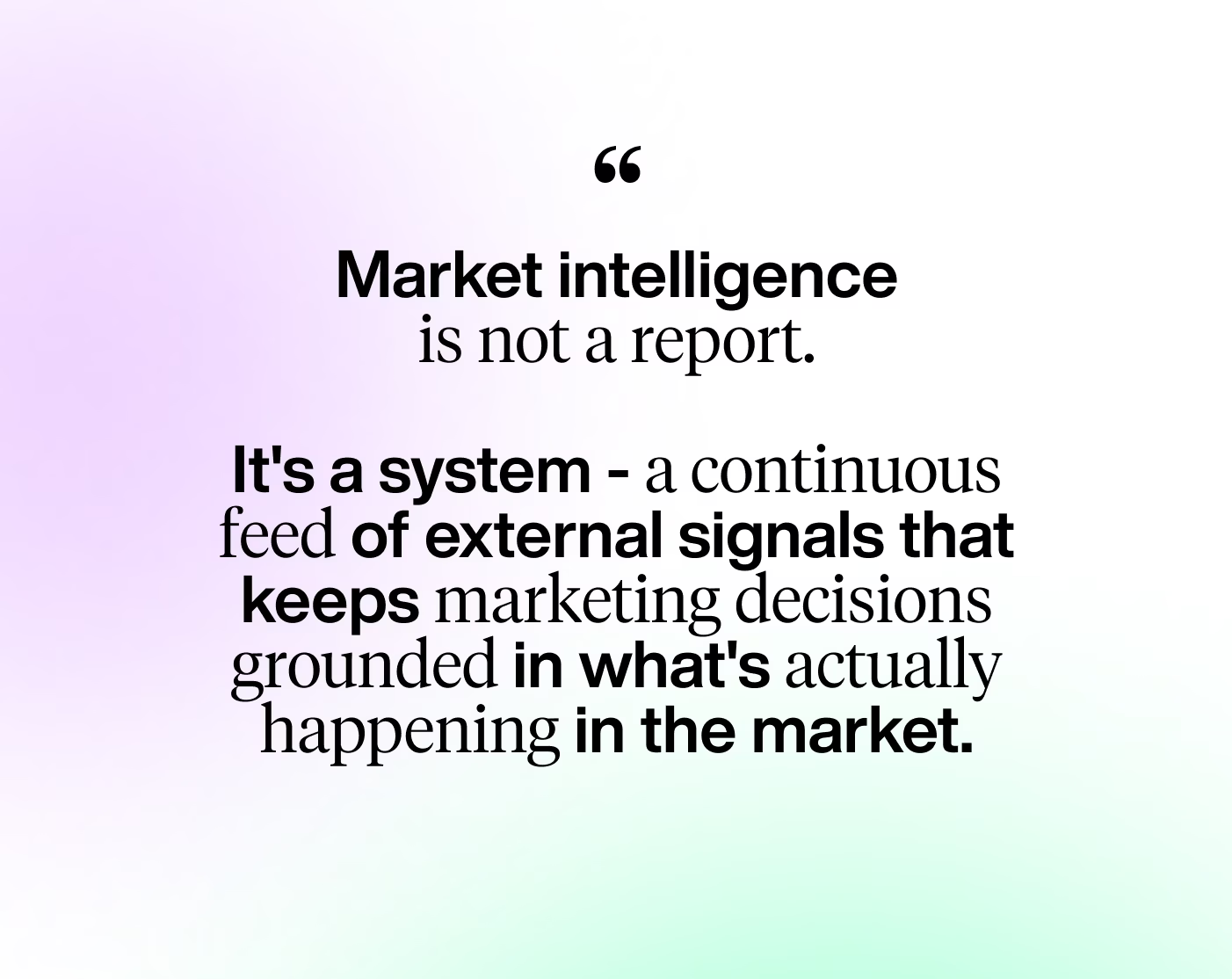
Market intelligence is the continuous system that keeps marketing teams connected to what's actually happening in their market.
Most marketing decisions are made on incomplete information — trend reports that are three months old, competitor audits from last quarter, briefs built on instinct, and a handful of data points that may or may not still hold up. That gap between what teams think is happening in the market and what's actually happening is where campaigns miss, budgets get wasted, and opportunities go to whoever was paying closer attention.
Market intelligence is the systematic way to close it.
This guide covers what market intelligence actually means for marketing teams, why it's different from market research and competitive intelligence, the four types every team should be working with, and what a modern MI system looks like in practice.
What Is Market Intelligence?
Market intelligence is the ongoing process of gathering, analysing, and acting on data about a brand's external environment — competitors, customers, trends, and market conditions. It's not a deliverable or a report. It's a continuous system that keeps a marketing team connected to what's happening outside the building.
A few distinctions are worth making clearly, because these terms get used interchangeably when they shouldn't.
Market intelligence is not market research. Market research is a project. It's a study with a start date, an end date, and a specific question it's trying to answer. Market intelligence is a program. It runs continuously, updates as conditions change, and informs decisions across the entire marketing function, not just the one that prompted the study.
Market intelligence is not business intelligence. Business intelligence looks inward — revenue, retention, conversion rates, operational performance. Market intelligence looks outward. The subject is the market, not the company.
Market intelligence is not the same as competitive intelligence. Competitive intelligence is one component of market intelligence, focused specifically on rivals. Market intelligence is broader. It includes customer understanding, industry trends, and market conditions that have nothing to do with what competitors are doing.
Why Market Intelligence Matters for Marketing Teams
Strategy decks get built, budgets get allocated, and campaigns go live based on information that was current at some point. The problem is that markets don't wait for planning cycles. By the time a trend makes it into a quarterly report, the early movers have already acted on it.
For marketing teams specifically, market intelligence connects to the work in concrete ways.
Campaign strategy. Campaigns built around trends that have already peaked perform worse than campaigns that anticipate them. Market intelligence gives teams the signal early enough to act, and not just observe.
Competitive positioning. Most brands audit competitors once a year, during planning. That's enough to confirm what you already suspected, not enough to find the white space in their messaging before someone else does. Continuous market intelligence changes that cadence.
Content planning. Editorial calendars built on keyword lists and last year's performance data are a lagging indicator of what audiences care about. Real-time signals — rising search interest, shifting conversation topics, emerging formats — give content teams something to plan around that's actually current.
GTM strategy. Timing a product launch or market entry without market context is a guess. Market intelligence provides the external evidence — category momentum, competitor moves, consumer sentiment — that turns timing from intuition into a defensible decision.
Budget allocation. Internal opinion shapes most budget conversations. Market intelligence brings external market evidence into that discussion by showing which categories are growing, where competitors are pulling back, and where audience attention is shifting. This makes it easier to justify where to invest and what to cut.
The Four Types of Market Intelligence
Market intelligence isn't a single data stream. It's four distinct types of external insight, each feeding a different part of the marketing function.
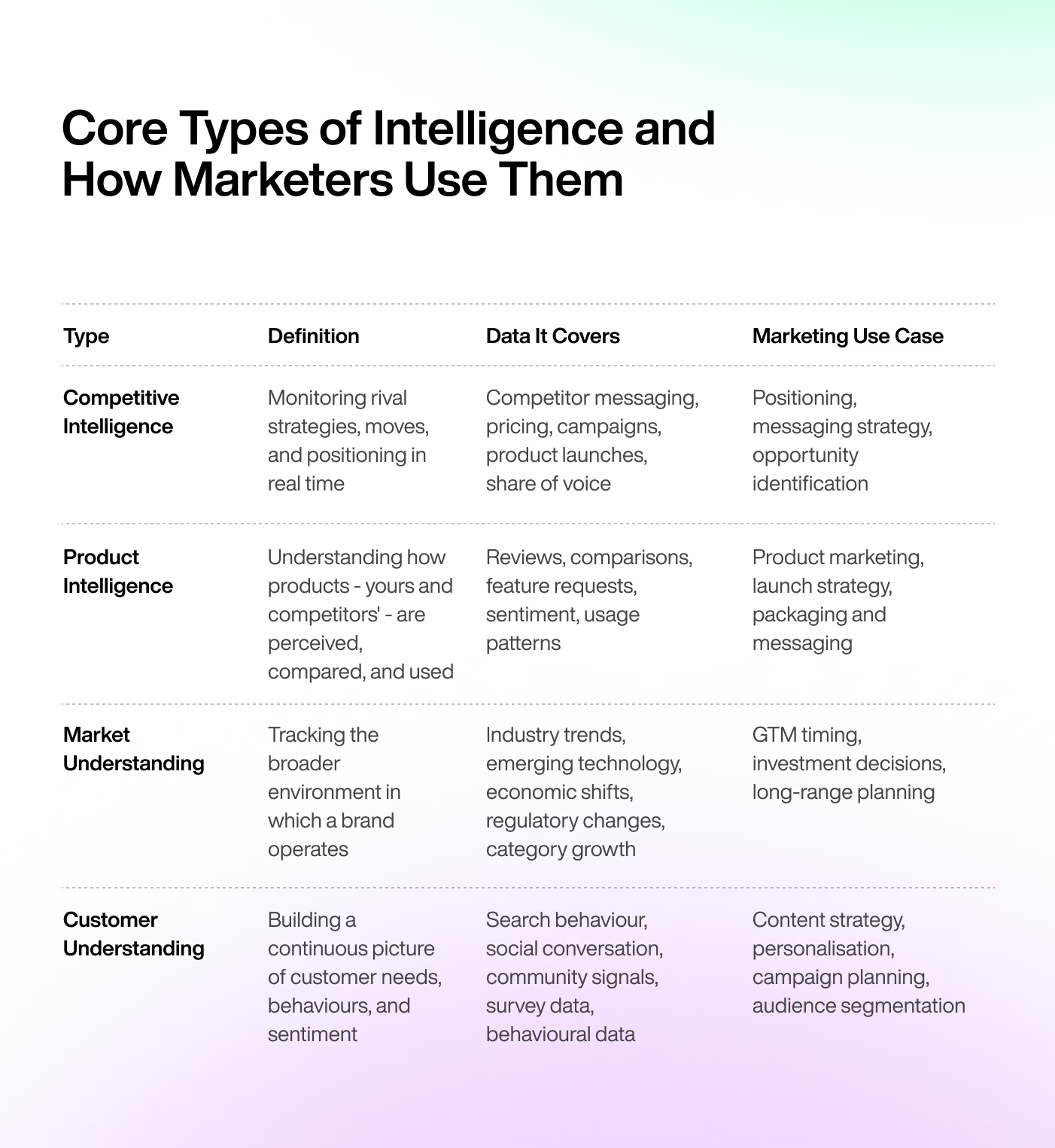
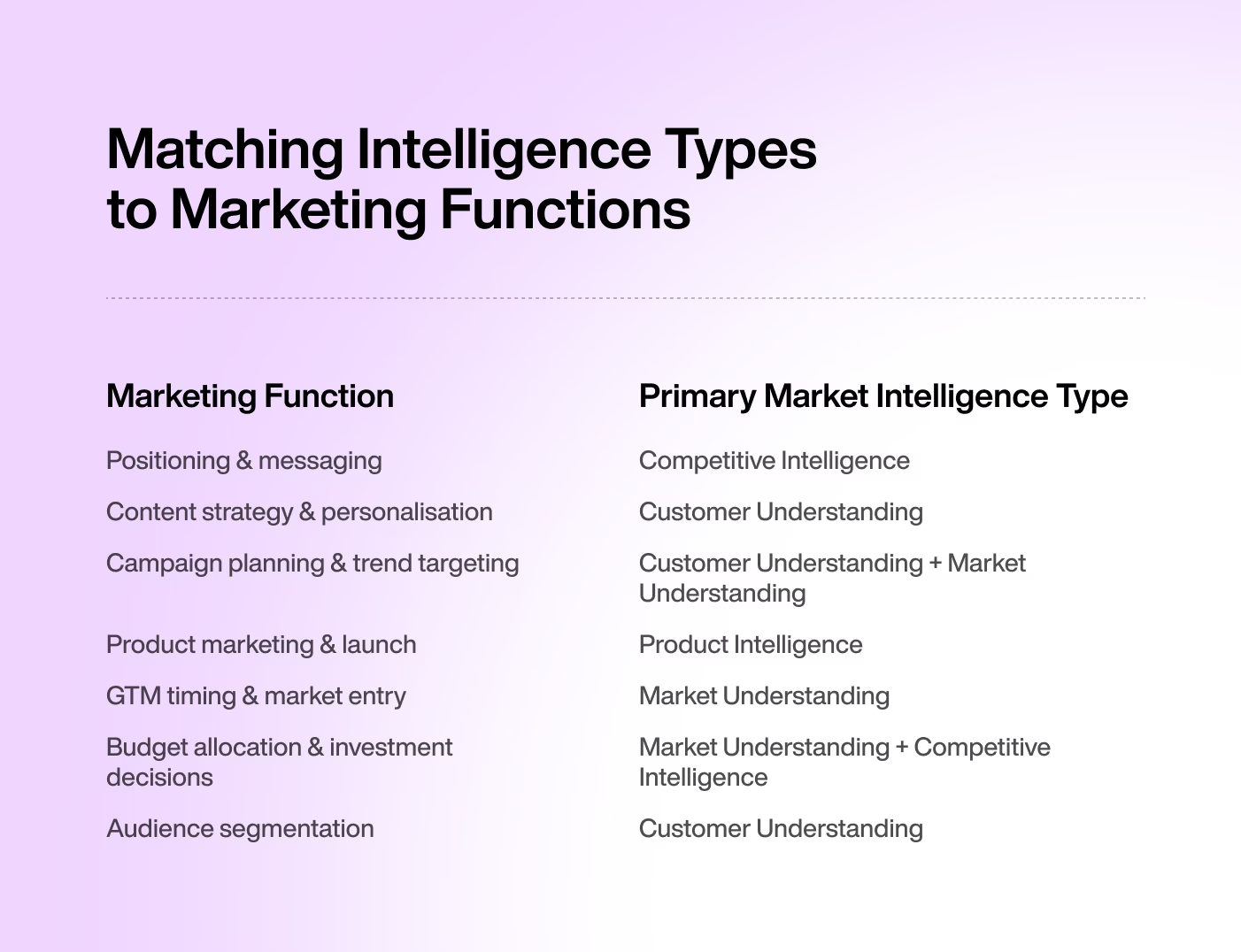
The types aren't siloed in practice. A campaign brief might draw on competitive intelligence for positioning, customer understanding for messaging, and market understanding for timing. The value of having all four running continuously is that they inform each other.
Market Intelligence vs Market Research vs Competitive Intelligence
Three terms that often get used interchangeably — and shouldn't. Here's the short version.
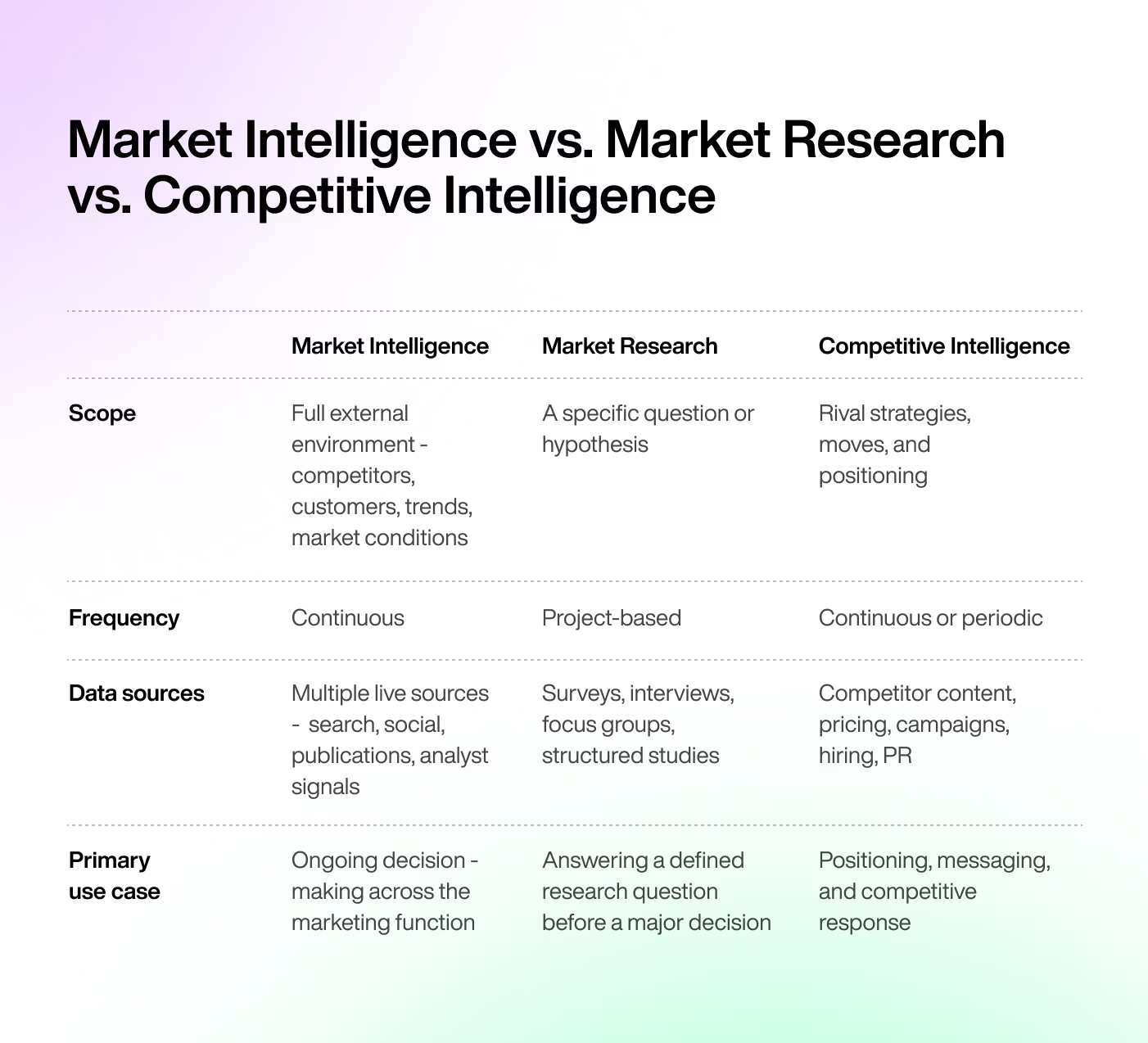
The key distinction is scope and cadence. Market research answers a question. Competitive intelligence tracks a specific set of rivals. Market intelligence does both — and more — on a continuous basis.
For a deeper look at how these differ in practice, see how market intelligence compares to market research and how market intelligence compares to competitive intelligence.
What Good Market Intelligence Looks Like in 2026
For most of its history, market intelligence was a slow process by necessity. Analyst reports took weeks to compile. Trend decks were built on last quarter's data and distributed months after the signal had already moved through the market. By the time insight reached the people making campaign decisions, it was context, not advantage.
That's changed. AI-powered MI platforms now detect signals across search, social, publications, and community sources in real time, validate them against multiple data points, and connect directly to the activation layer — briefing, content creation, campaign execution. The gap between signal and action, which used to be measured in weeks, is now measured in hours.
The bar has shifted accordingly. When Samsung launched the Galaxy Z Fold7 across Croatia, Serbia, and Slovenia, they didn't run a standard product marketing cycle. Instead, they used a real-time intelligence system to identify cultural hooks and usage narratives across three distinct markets in under two weeks. By analysing Reddit conversations, TikTok trends, and search behaviour around foldable phones, the team surfaced three audience-specific narratives — for multitaskers, gamers, and creators — and turned them into localised campaign assets before the launch window closed. The result was a 60% CTR growth across markets.
For teams looking to build this kind of capability, Recommend is built around exactly that workflow — starting with real-time cultural signals, online conversations, and influential publications, then connecting that intelligence directly to execution. The insight doesn't sit in a separate research layer; it becomes the foundation for the brief, the content, and the campaign.
How to Build a Market Intelligence System (Brief Overview)
A market intelligence system is only as useful as the decisions it feeds. Getting there requires more than picking the right tools — it means aligning what you track with how your team actually works, and making sure insight reaches the people who need it before the moment passes.
The full breakdown is in How to Build a Market Intelligence Strategy, covering everything from auditing your current gaps to structuring a system that runs continuously without becoming another thing to manage.
FAQ
What is the difference between market intelligence and market research?
Market research is a project. It starts with a specific question, runs for a defined period, and produces a deliverable. Market intelligence is a continuous system that monitors the external environment on an ongoing basis. Research answers a question. Intelligence keeps you informed, so fewer decisions require study in the first place.
What is the difference between market intelligence and competitive intelligence?
Competitive intelligence is one component of market intelligence, focused specifically on rival strategies, messaging, and positioning. Market intelligence is broader. It covers customers, industry trends, market conditions, and product perception, in addition to competitors.
How does AI improve market intelligence?
The core limitation of traditional market intelligence was speed. By the time signals were gathered, validated, and distributed, the window to act had often closed. AI addresses that directly. Modern platforms monitor multiple data sources simultaneously, surface patterns that manual analysis would miss, and compress the time between signal detection and activation from weeks to hours.
What data sources are used in market intelligence?
It depends on what you're tracking, but a robust MI system typically draws from search trend data, social listening, industry publications, competitor content and campaigns, consumer review platforms, community forums, and analyst signals. The value isn't in any single source — it's in the system that connects and validates across all of them.
How often should market intelligence be updated?
For most marketing teams, continuous monitoring with regular synthesis points works better than periodic updates. Real-time signals need to be tracked constantly — trends don't wait for monthly reporting cycles. The synthesis layer — turning raw signals into actionable insight — can happen weekly or bi-weekly depending on the team's decision cadence.